History and Culture

Showing 529–552 of 983 results

Il Carnevale a Napoli, 1884

30,00 

Carnival in Naples It is a woodcut extracted from The Italian Illustration of 1884, published in Milan by Fratelli Treves Editori.
Questa opera cattura l’atmosfera vivace del Carnevale napoletano, offrendo uno sguardo affascinante sulla cultura e le tradizioni dell’epoca.

  • Sheet size: cm. 25×35 approx.
  • Support: Paper
  • Condition: Excellent

Carnival in Naples, drawing by E. Matania, 1884

30,00 

Carnival in Naples è una xilografia realizzata da E. Matania nel 1884, estratta dalla celebre rivista The Italian Illustration, published in Milan by Fratelli Treves Editori.
Questo affascinante disegno cattura l’essenza vivace del Carnevale napoletano, offrendo uno sguardo unico sulla cultura e le tradizioni dell’epoca.

  • Sheet size: cm. 25×35 approx.
  • Support: Paper
  • Condition: Excellent
  • Notes: Il foglio verrà spedito intero, contenente la stampa e con scritte al verso.

Carnival in Naples, drawing by E. Matania, 1884

30,00 

Carnival in Naples it is a woodcut made by E. Matania in 1884, extracted from the prestigious magazine The Italian Illustration, published in Milan by Fratelli Treves Editori.
This work captures the lively and festive atmosphere of the Neapolitan Carnival, making it a unique piece for collectors and art lovers.

  • Sheet size: cm. 25×35 approx.
  • Support: Paper
  • Condition: Excellent

Carnival in Rome, 1884

30,00 

Carnival in Rome It is a woodcut extracted from The Italian Illustration of 1884, published in Milan by Fratelli Treves Editori.
This work captures the lively atmosphere of the Roman carnival, offering a fascinating insight into the culture and traditions of the time.

  • Sheet size: cm. 25×35 approx.
  • Support: Paper
  • Condition: Excellent

The entire sheet containing the print will be sent.

Carnival in Rome, 1884

30,00 

Carnival in Rome It is a woodcut extracted from The Italian Illustration of 1884, published in Milan by Fratelli Treves Editori.
This work captures the lively and festive atmosphere of the Roman Carnival, an event rich in traditions and colors.

  • Sheet size: cm. 25×35 approx.
  • Support: Paper
  • Condition: Excellent

The entire sheet containing the print will be sent.

The Carnival of Milan, The Italian Masks, 1884

30,00 

Il Carnevale di Milano, Le Maschere Italiane It is a woodcut extracted from The Italian Illustration of 1884, published in Milan by Fratelli Treves Editori.
Questa opera cattura l’essenza del Carnevale milanese, rappresentando le tradizionali maschere italiane in un contesto vivace e festoso.

  • Sheet size: cm. 25×35 approx.
  • Support: Paper
  • Condition: Excellent

Napoleon's Catafalque, 1840

50,00 

Il Catafalco di Napoleone è una litografia del 1840 che rappresenta il catafalco eretto in onore di Napoleone Bonaparte nell’Eglise des Invalides.
Questa opera, di grande impatto visivo, cattura l’essenza del funerale di uno dei più celebri leader della storia.

  • Sheet size: cm. 24×36 circa
  • Technique: Lithography
  • Support: Cardboard
  • Condition: Excellent state of preservation

The Cabbage, 1850

30,00 

Il Cavolo è una litografia colorata a mano con acquarello realizzata nel 1850.
Questa opera, di carattere umoristico e satirico, rappresenta un esempio significativo dell’arte del XIX secolo.

  • Sheet size: cm. 24×18 approx.
  • Support: Thick paper, glued to another paper support
  • Condition: Excellent

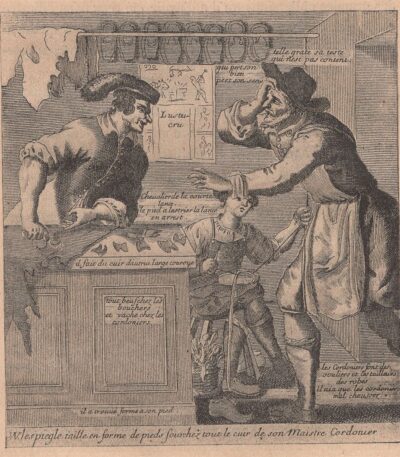
The cobbler, 19th century woodcut

25,00 

The Cobbler è un’incisione in xilografia risalente all’800, proveniente da una stampa antica.
This work is taken from a text from the late 19th century and features text around and on the back.

  • Sheet size: cm. 27×18 approx.
  • Engraving size: cm. 16×11 approx.
  • Support: Paper
  • Condition: Excellent

The full page, containing the print, extracted from the book will be sent.

Il Concilio di Trento, 1840

20,00 

Il Concilio di Trento It is a copper engraving made in 1840.
This work is taken from Picturesque Omnibus, an artistic and literary encyclopedia edited by Vincenzo Torelli, published in Naples by the Omnibus printing house.

  • Sheet size: cm. 13×16 approx.
  • Condition: Excellent
  • Support: Paper

The print has been removed from the book and has the verso printed. The entire page containing the print will be sent.

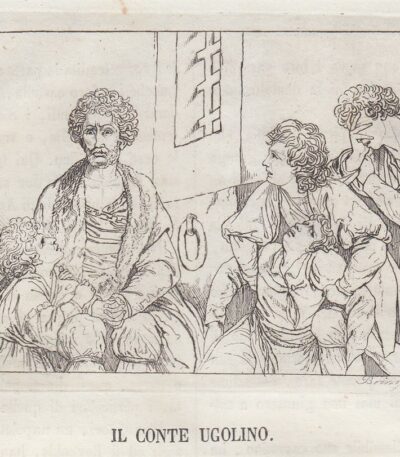
Il Conte Ugolino, 1839

15,00 

Il Conte Ugolino It is an engraving made in 1839, taken from the work Picturesque Omnibus, an artistic and literary encyclopedia directed by Vincenzo Torelli.
Questa incisione in rame misura cm. 8×10 e presenta margini quasi assenti.

  • Sheet size: Small
  • Engraving size: cm. 8×10
  • Technique: Burin
  • Condition: Excellent
  • Support: Paper

The print is contained in the book page and has writing on the back; the entire page containing the engraving will be sent.

Il Corsaro Incisione su rame 1838

15,00 

Il Corsaro It is a copper engraving made in 1838 dall’incisore And. Russo.
This work is taken from thePicturesque Omnibus e rappresenta un momento toccante tra Medora e il suo amato, ispirato dal melodramma di Verdi e dall’omonima novella in versi di Byron.

  • Sheet size: cm. 27×21 approx.
  • Engraving size: cm. 14×11 approx.
  • Support: Paper
  • Condition: Excellent state of preservation

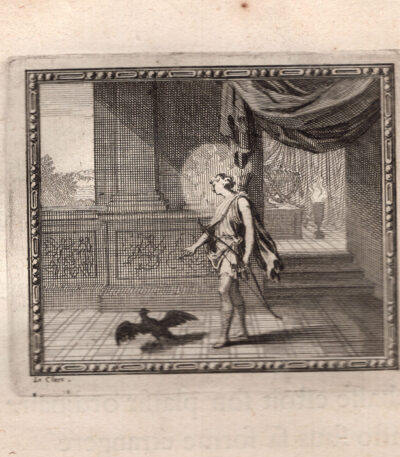
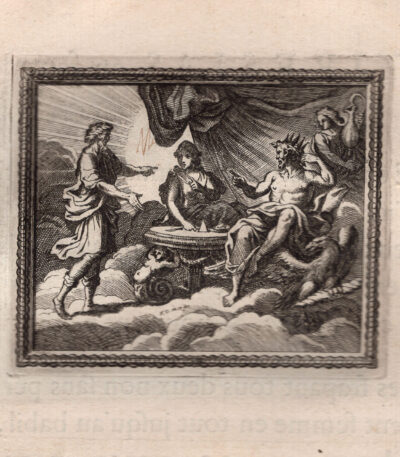
Il Corvo di Apollo, Metamorfosi di Ovidio, acquaforte del 1676

30,00 

Questa splendida incisione del 1676 proviene dalla prestigiosa edizione delle “Métamorphoses d’Ovide en rondeaux” Of Isaac de Benserade, un’opera di grande raffinatezza, commissionata da Luigi XIV per l’educazione del Delfino di Francia.

Descrizione dell’opera

  • Titolo: Stampa tratta da Les Métamorphoses d’Ovide en rondeaux

  • Author: Isaac de Benserade (testo), Le Clerc, Chauveau e Le Brun (incisioni)

  • Publisher: De l’Imprimerie Royale, Parigi, 1676

  • Technique: Acquaforte su carta vergellata (testo al verso)

  • Dimensions:

    • Incisione: cm 7,5 × 9 (alla battuta del rame)

    • Foglio: cm 27 × 20

Importanza storica e artistica

L’opera di Benserade è una delle più celebri reinterpretazioni seicentesche delle Ovid's Metamorphoses. La particolarità di questa edizione è il suo approccio didattico ed estetico: ogni mito è presentato attraverso una citazione in latino, una riscrittura in versi (i rondeaux, tipici componimenti poetici francesi) e un’incisione su rame che illustra la scena.

Le incisioni furono realizzate da tre importanti artisti dell’epoca:

  • Sébastien Le Clerc (1637-1714), incisore di corte del Re Sole

  • François Chauveau (1613-1676), celebre illustratore parigino

  • Charles Le Brun (1619-1690), pittore ufficiale di Luigi XIV

Questa stampa rappresenta un esempio straordinario di arte barocca, caratterizzata da un tratto preciso e dettagliato, che enfatizza la drammaticità e il dinamismo delle scene mitologiche.

Valore collezionistico

L’opera, stampata presso l’Imprimerie Royale, è una testimonianza del lusso e della raffinatezza della cultura francese sotto Luigi XIV. Le incisioni, realizzate con grande maestria, sono oggi oggetti di culto tra i collezionisti di ancient books, incisioni del XVII secolo And iconografia mitologica.

Un pezzo di altissimo valore storico e artistico, espressione della grande tradizione incisoria francese e dell’interesse del Re Sole per l’arte e la letteratura classica.

The Blacksmith dressed, 19th century woodcut

25,00 

The Blacksmith dressed it's a woodcut humorous 19th century print, inspired by an old 17th century print.
This work is taken from a text from the late 19th century and features text around and on the back.

  • Sheet size: cm. 27×18 approx.
  • Engraving size: cm. 15×11 approx.
  • Support: Paper
  • Condition: Excellent

The full page, containing the print, extracted from the book will be sent.

Il Filosofo Scita, favola di de La Fontaine, 1755

70,00 

Le Philosophe Scythe – Favola CCXXXIII
Autore: Jean-Baptiste Oudry (J. B. Oudry inv.)
Incisore: B. L. Prévost (B. L. Prevost sculp.)
Tecnica: Acquaforte originale
Epoca: 1755
Origine: Illustrazione della favola di Jean de La Fontaine
Dimensions:
Foglio: circa 39 x 25 cm
Stampa alla battuta del rame: 30 x 21 cm
Carta: Vergellata
Description:
Questa raffinata acquaforte originale di Jean-Baptiste Oudry, eseguita da B. L. Prévost, fa parte delle illustrazioni create per le celebri favole di Jean de La Fontaine, pubblicate a Parigi nel 1755.

La scena illustra la favola del Filosofo Scita, una delle più celebri opere morali di La Fontaine. L’incisione è caratterizzata da una composizione dettagliata e dinamica, tipica dello stile di Oudry, celebre per le sue raffinate illustrazioni naturalistiche e allegoriche.

L’opera è stampata su carta vergellata con filigrana, con un’impressione nitida e ben conservata. La firma di Oudry e Prévost sotto l’incisione certifica l’autenticità di questa prestigiosa stampa settecentesca. Un esemplare di grande fascino per collezionisti e appassionati di incisioni antiche e illustrazioni letterarie.

Il Giudizio di Tiresia, Metamorfosi di Ovidio, acquaforte del 1676

30,00 

Questa splendida incisione del 1676 proviene dalla prestigiosa edizione delle “Métamorphoses d’Ovide en rondeaux” Of Isaac de Benserade, un’opera di grande raffinatezza, commissionata da Luigi XIV per l’educazione del Delfino di Francia.

Descrizione dell’opera

  • Titolo: Stampa tratta da Les Métamorphoses d’Ovide en rondeaux

  • Author: Isaac de Benserade (testo), Le Clerc, Chauveau e Le Brun (incisioni)

  • Publisher: De l’Imprimerie Royale, Parigi, 1676

  • Technique: Acquaforte su carta vergellata (testo al verso)

  • Dimensions:

    • Incisione: cm 7,5 × 9 (alla battuta del rame)

    • Foglio: cm 27 × 20

Importanza storica e artistica

L’opera di Benserade è una delle più celebri reinterpretazioni seicentesche delle Ovid's Metamorphoses. La particolarità di questa edizione è il suo approccio didattico ed estetico: ogni mito è presentato attraverso una citazione in latino, una riscrittura in versi (i rondeaux, tipici componimenti poetici francesi) e un’incisione su rame che illustra la scena.

Le incisioni furono realizzate da tre importanti artisti dell’epoca:

  • Sébastien Le Clerc (1637-1714), incisore di corte del Re Sole

  • François Chauveau (1613-1676), celebre illustratore parigino

  • Charles Le Brun (1619-1690), pittore ufficiale di Luigi XIV

Questa stampa rappresenta un esempio straordinario di arte barocca, caratterizzata da un tratto preciso e dettagliato, che enfatizza la drammaticità e il dinamismo delle scene mitologiche.

Valore collezionistico

L’opera, stampata presso l’Imprimerie Royale, è una testimonianza del lusso e della raffinatezza della cultura francese sotto Luigi XIV. Le incisioni, realizzate con grande maestria, sono oggi oggetti di culto tra i collezionisti di ancient books, incisioni del XVII secolo And iconografia mitologica.

Un pezzo di altissimo valore storico e artistico, espressione della grande tradizione incisoria francese e dell’interesse del Re Sole per l’arte e la letteratura classica.

The Butcher, 19th century woodcut

25,00 

The Butcher It is a 19th century woodcut engraving, inspired by a 17th century satirical and humorous print.
This work is taken from a text from the late 19th century and features text around and on the back.

  • Sheet size: cm. 27×18 approx.
  • Engraving size: cm. 8×11 approx.
  • Support: Paper
  • Condition: Excellent

The full page, containing the print, extracted from the book will be sent.

The month of August, 1838

15,00 

Il mese di Agosto it's a lithographic printing realizzata nel 1838, parte della celebre opera Picturesque Polyorama, aimed at spreading useful knowledge among all classes of society.
Questa stampa, di dimensioni contenute, è stata ritagliata dal libro e presenta scritte al verso. Viene fornita con la pagina intera che contiene la stampa, rendendola un pezzo unico per collezionisti e appassionati.

  • Sheet size: cm. 7x8 approx.
  • Support: Paper
  • Condition: Excellent

The month of December, 1841

15,00 

Il mese di Dicembre è un’allegoria rappresentativa del mese di Dicembre, realizzata nel 1841.
This lithographic printing misura cm. 9×8 e proviene dall’opera periodica Picturesque Polyorama, aimed at spreading useful knowledge among all classes of society.

  • Margins: almost absent
  • Typography: Napoli, dalla tipografia e litografia del Poliorama Pittoresco, Filippo Cirelli Direttore
  • Content: the print is contained in the book page with writing around and on the back
  • Shipping: viene spedita l’intera pagina contenente la stampa

The month of February, 1838

15,00 

Il mese di Febbraio è un’allegoria rappresentativa del secondo mese dell’anno, realizzata nel 1838.
Questa stampa litografica, parte dell’opera Picturesque Polyorama, è diretta a diffondere conoscenze utili in tutte le classi della società.

  • Sheet size: cm. 7x8 approx.
  • Support: Paper
  • Condition: Excellent

The print is contained in a page cut from the book and has writing on the verso. The entire page containing the print is shipped.

The month of January, 1838

15,00 

The month of January It is an allegory representing the month of January, created in 1838.
This lithographic printing comes from the periodical work Picturesque Polyorama, aimed at spreading useful knowledge among all classes of society.

  • Sheet size: cm. 7x8 approx.
  • Support: Paper
  • Condition: Excellent

The print is contained in a page cut from the book and has writing on the verso. The entire page containing the print is shipped.

The month of June, 1838

15,00 

Il mese di Giugno è un’allegoria rappresentativa del mese di Giugno, realizzata nel 1838.
This lithographic printing misura cm. 7×8 e presenta margini quasi assenti.
It is taken from the work Picturesque Polyorama, a periodical publication designed to disseminate useful knowledge to all classes of society.
La stampa è stata realizzata a Napoli dalla tipografia e litografia del Poliorama Pittoresco, sotto la direzione di Filippo Cirelli.
The print is contained in a page cut from the book and has writing on the verso. The entire page containing the print is shipped.

The month of July, 1838

15,00 

Il mese di Luglio è un’allegoria rappresentativa del mese di Luglio, realizzata nel 1838.
Questa stampa litografica è tratta dall’opera Picturesque Polyorama, an important publication aimed at spreading useful knowledge among all social classes.

  • Sheet size: cm. 7x8 approx.
  • Support: Paper
  • Condition: Excellent

The print is contained in a page cut from the book and has writing on the verso. The entire page containing the print is shipped.

The month of May, 1838

15,00 

Il mese di Maggio è un’allegoria rappresentativa del mese di Maggio, realizzata nel 1838.
This lithographic printing è tratta dall’opera periodica Picturesque Polyorama, aimed at spreading useful knowledge among all classes of society.

  • Sheet size: cm. 7x8 approx.
  • Margins: almost absent
  • Support: Carta, pagina ritagliata dal libro
  • Condition: Excellent

La stampa presenta scritte al verso e viene spedita con l’intera pagina contenente l’opera.

Explore the fascinating world of antique prints

Antique prints are silent witnesses of history, capable of transporting us to distant eras through the art of engraving. Our e-commerce offers a vast selection of these precious finds, carefully selected for their authenticity and artistic value. Whether you are an expert collector or a novice enthusiast, you will find unique pieces here that will enrich your spaces with a touch of timeless elegance.

A safe and rewarding shopping experience

We understand the importance of each individual print and are committed to ensuring a flawless purchasing experience. Our secure payment system and insured shipping with professional packaging ensure that each piece arrives in the best condition. Our expertise in the sector allows us to offer detailed descriptions and personalized advice, helping you to make informed choices. If you have any questions or specific requests, do not hesitate to contact us: we will be happy to guide you into the wonderful world of antique prints.