Excellent

Showing 601–624 of 1980 results

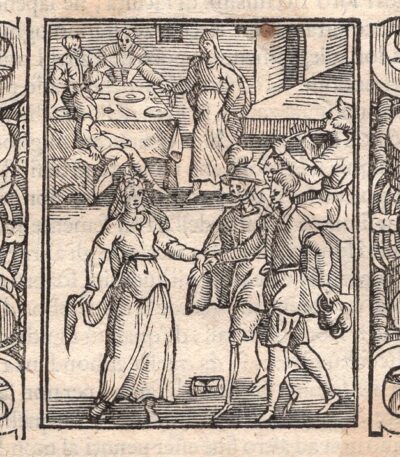
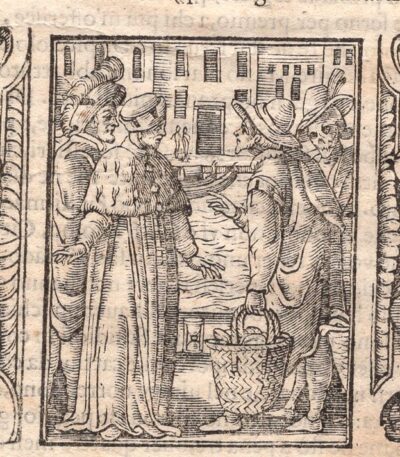
Fabio Glissenti, La Morte Gondoliere, 1596

35,00 

La Morte Gondoliere It is an engraving made by Fabio Glissenti in 1596, part of the work Athanatophilia, inspired by the famous Dance of Death by Hans Holbein.
Questa xilografia rappresenta un momento significativo del pensiero colto del tardo Cinquecento, affrontando il tema della morte con un approccio a volte ironico e irriverente.

  • Sheet size: cm. 21×15 approx.
  • Engraving size: cm. 6,5×10 circa
  • Technique: Woodcut
  • Condition: Excellent
  • Support: Paper

Fabio Glissenti, La Morte in guerra, 1596

35,00 

La Morte in guerra It is an engraving made by Fabio Glissenti in 1596, taken from the work Athanatophilia, inspired by the famous Dance of Death by Hans Holbein.
Questa xilografia, non firmata, presenta un’immagine di dimensioni cm. 6,5×5 circa su un foglio di cm. 21×15 circa.

  • Sheet size: cm. 21×15 approx.
  • Engraving size: cm. 6.5x5 approx.
  • Technique: Woodcut
  • Condition: Excellent
  • Support: Paper

Glissenti, medico e filosofo, affronta il tema della morte con un approccio a volte ironico e irriverente. La sua opera, sottoposta a censura, è un’importante testimonianza del pensiero colto del tardo Cinquecento.
Le stampe, parte del ciclo della ‘Danza Macabra’, sono rare e rappresentano una parte significativa della cultura e della filosofia di quel periodo.

Fabio Glissenti, La Morte in una cassa, 1596

35,00 

La Morte in una cassa It is an engraving made by Fabio Glissenti in 1596, taken from the work Athanatophilia, inspired by the famous Dance of Death by Hans Holbein.
Questa xilografia, non firmata, presenta un’immagine di dimensioni cm. 6,5×10 circa su un foglio di cm. 21×15 circa.

  • Sheet size: cm. 21×15 approx.
  • Engraving size: cm. 6,5×10 circa
  • Support: Paper
  • Condition: Excellent state of preservation

Glissenti, medico e filosofo, affronta il tema della morte con un approccio a volte ironico e irriverente, sfidando la censura del suo tempo. La sua opera principale, l’Athanatophilia, è un voluminoso lavoro che esplora il dispiacere della morte attraverso dialoghi e novelle, rendendo questa incisione un’importante testimonianza del pensiero colto del tardo Cinquecento.

Fabio Glissenti, La Morte nel Letto, 1596

35,00 

La Morte nel Letto It is an engraving made by Fabio Glissenti in 1596, part of the work Athanatophilia, inspired by the famous Dance of Death by Hans Holbein.
In questa scena, l’uomo tenta di sfuggire alla Morte cadendo dal letto, con un esito tragico che lo porta a rompersi una costola.

  • Sheet size: cm. 21×15 approx.
  • Engraving size: cm. 6,5×10 circa
  • Technique: Woodcut
  • Condition: Excellent
  • Support: Paper

Questa stampa, non firmata, è un esempio della riflessione di Glissenti sulla morte, affrontata con un tono a volte ironico e irriverente.
La sua opera, che ha subito la censura, è un’importante testimonianza del pensiero colto del tardo Cinquecento.

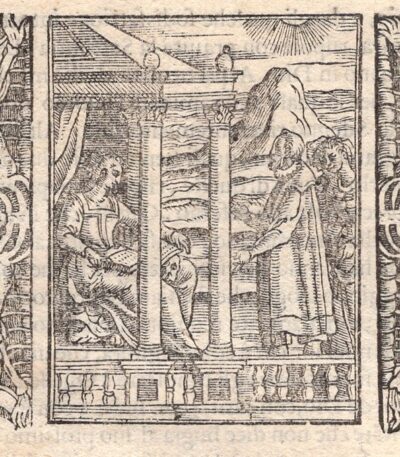
Fabio Glissenti, La Prudenza e la Morte, 1596

35,00 

La Prudenza e la Morte It is an engraving made by Fabio Glissenti in 1596, taken from the work Athanatophilia, inspired by the famous Dance of Death by Hans Holbein.
Questa xilografia, non firmata, presenta un’immagine di dimensioni cm. 6,5×10 circa su un foglio di cm. 21×15 circa.

  • Sheet size: cm. 21×15 approx.
  • Engraving size: cm. 6,5×10 circa
  • Technique: Woodcut
  • Condition: Excellent
  • Support: Paper

Glissenti, medico e filosofo, affronta il tema della morte con un approccio a volte ironico e irriverente, riflettendo il pensiero colto del tardo Cinquecento. La sua opera principale, l’Athanatophilia, è un voluminoso lavoro che include cinque dialoghi e trenta novelle, affrontando la censura e le controversie del suo tempo. Queste rare stampe rappresentano un’importante testimonianza della cultura e della filosofia dell’epoca.

Fabio Glissenti, La Sfortuna e la Morte, 1596

35,00 

La Sfortuna e la Morte It is an engraving made by Fabio Glissenti in 1596, taken from the work Athanatophilia, inspired by the famous Dance of Death by Hans Holbein.
Questa xilografia rappresenta un’importante riflessione sul tema della morte, affrontato con un tono a volte ironico e irriverente.

  • Sheet size: cm. 21×15 approx.
  • Engraving size: cm. 6,5×10 circa
  • Support: Paper
  • Condition: Excellent

Glissenti, medico e filosofo, ha affrontato la censura e un processo per le sue idee audaci, rendendo questa opera un raro esempio del pensiero colto del tardo Cinquecento.
La sua opera principale, l’Athanatophilia, è un voluminoso lavoro che include dialoghi e novelle, esplorando il tema della morte con una profondità unica.

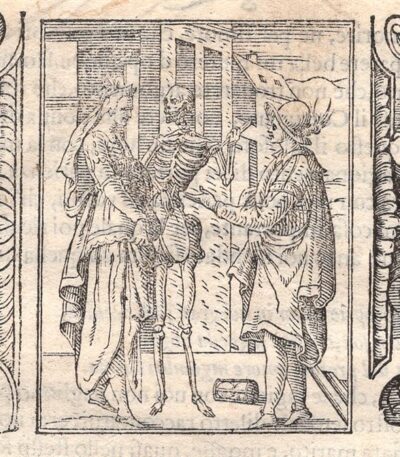
Fabio Glissenti, Moglie e la Morte, 1596

35,00 

Fabio Glissenti, Moglie e la Morte è una xilografia realizzata nel 1596, parte dell’opera Athanatophilia, inspired by the famous Dance of Death by Hans Holbein.
This print represents a significant example of the cultured thought of the late sixteenth century, addressing the theme of death with an approach that is at times ironic and irreverent.

  • Sheet size: cm. 21×15 approx.
  • Image size: cm. 6,5×10 circa
  • Support: Paper
  • Condition: Excellent

L’opera di Glissenti, medico e filosofo, è composta da cinque dialoghi e trenta novelle, affrontando la morte con una visione disincantata. Nonostante le censure e le controversie legali, il suo lavoro rimane un’importante testimonianza del pensiero dell’epoca.

Fabio Glissenti, Morte a Venezia, Il Doge, 1596

35,00 

Morte a Venezia, Il Doge It is an engraving made by Fabio Glissenti in 1596, taken from the work Athanatophilia, inspired by the famous Dance of Death by Hans Holbein.
Questa xilografia rappresenta un’importante riflessione sulla morte, affrontata con un tono a volte ironico e irriverente dall’autore, un intellettuale disincantato del suo tempo.

  • Sheet size: cm. 21×15 approx.
  • Engraving size: cm. 6,5×10 circa
  • Support: Paper
  • Condition: Excellent

L’opera di Glissenti, che affrontò la censura e un processo per le sue idee, è un raro esempio del pensiero colto del tardo Cinquecento.
Le stampe, parte del ciclo della ‘Danza Macabra’, sono adornate da bellissime figure e rappresentano un’importante testimonianza della cultura del tempo.

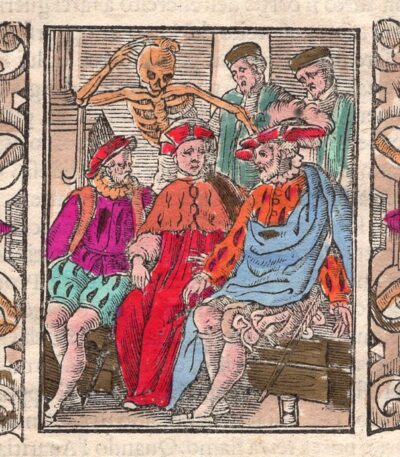
Fabio Glissenti, Nobili e la Morte, 1596

40,00 

Fabio Glissenti, Nobili e la Morte è una xilografia acquarellata realizzata nel 1596, parte dell’opera Athanatophilia, inspired by the famous Dance of Death by Hans Holbein.
Questa stampa, non firmata, misura circa cm. 6,5×10 sull’intero foglio di cm. 21×15.

  • Sheet size: cm. 21×15 approx.
  • Image size: cm. 6,5×10 circa
  • Technique: Watercolor woodcut
  • Condition: Excellent
  • Support: Paper

Glissenti, medico e filosofo, affronta il tema della morte con un approccio ironico e provocatorio, sfidando la censura del suo tempo. La sua opera, composta da cinque dialoghi e un trattato, riflette il pensiero colto del tardo Cinquecento, rendendo queste stampe rare e preziose.

Fabio Glissenti, Venezia e la Morte, 1596

35,00 

Venezia e la Morte It is an engraving made by Fabio Glissenti in 1596, part of the work Athanatophilia, inspired by the famous Dance of Death by Hans Holbein.
Questa xilografia, non firmata, presenta un’immagine di dimensioni cm. 6,5×10 circa su un foglio di cm. 21×15 circa.

  • Sheet size: cm. 21×15 approx.
  • Engraving size: cm. 6,5×10 circa
  • Support: Paper
  • Condition: Excellent

Glissenti, medico e filosofo, affronta il tema della morte con un approccio a volte ironico e irriverente, nonostante le censure e le controversie legali che ha dovuto affrontare. Le sue opere, tra cui l’Athanatophilia, offrono uno sguardo penetrante sul pensiero colto del tardo Cinquecento, rendendo questa incisione un’importante testimonianza storica.

Fabriano, Piazza Vitt. Emanuele, 1890

20,00 

Fabriano, Vittorio Emanuele Square it's a woodblock print dating back to 1890, representative of the Italian text of the late nineteenth century.
This work presents a large-sized image cm. 10×12 approximately, surrounded by text and with additional text on the back of the sheet. The complete sheet measures cm. 30×20 and will be shipped in its entirety, ensuring a complete viewing experience.

  • Sheet size: cm. 30×20 approx.
  • Image size: cm. 10×12 approx.
  • Technique: Woodcut
  • Condition: Excellent
  • Support: Paper

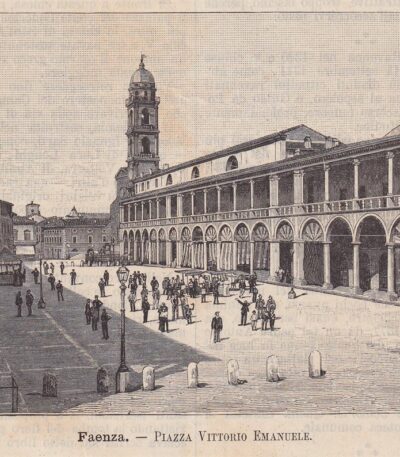
Faenza, Vittorio Emanuele Square, 1890

20,00 

Faenza, Vittorio Emanuele Square, 1890 it's a woodblock print which represents an important view of the city of Faenza.
Made in 1890, this work is taken from Illustrated geographical Italy by P. Premoli.
The print, of small size, is characterized by a descriptive text around and on the back, and will be shipped with the full page, retaining its original charm.

  • Sheet size: cm. 12×9 approx.
  • Technique: Woodcut
  • Support: Light paper
  • Condition: Excellent

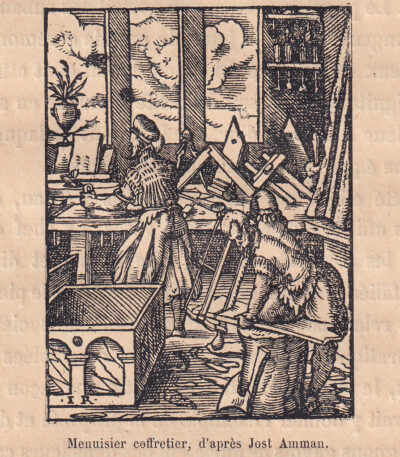
Falegname ebanista, xilografia dell’800

25,00 

Falegname ebanista It is a 19th century woodcut, made by Jost Amman.
Questa incisione è tratta da un testo della fine dell’800 e presenta un testo attorno e al verso.

  • Sheet size: cm. 27×18 approx.
  • Engraving size: cm. 8×6 approx.
  • Support: Paper
  • Condition: Excellent

The full page, containing the print, extracted from the book will be sent.

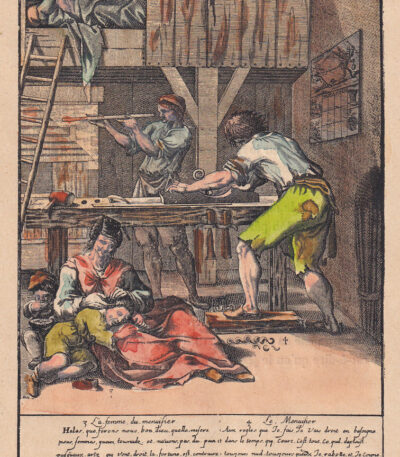
Falegname, interno di bottega

30,00 

Falegname, interno di bottega è una xilografia acquarellata risalente al XVII secolo.
Questa stampa è tratta da un testo della fine dell’800 e presenta un affascinante interno di bottega, con dettagli che catturano l’arte della falegnameria.

  • Sheet size: cm. 27×18 approx.
  • Engraving size: cm. 16×12 approx.
  • Support: Paper
  • Condition: Excellent

La pagina intera, contenente la stampa, verrà spedita estratta dal libro, con testo attorno e al verso.

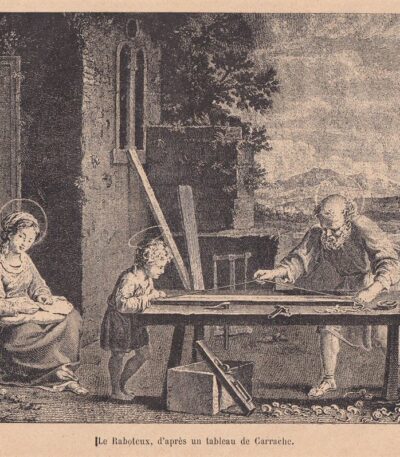
Falegname, la Sacra Famiglia, xilografia dell’800

25,00 

Falegname, la Sacra Famiglia è una xilografia dell’800, ispirata a una stampa antica di Carracci.
This work is taken from a text from the late 19th century and features text around and on the back.

  • Sheet size: cm. 27×18 approx.
  • Engraving size: cm. 15×11 approx.
  • Support: Paper
  • Condition: Excellent

The full page, containing the print, extracted from the book will be sent.

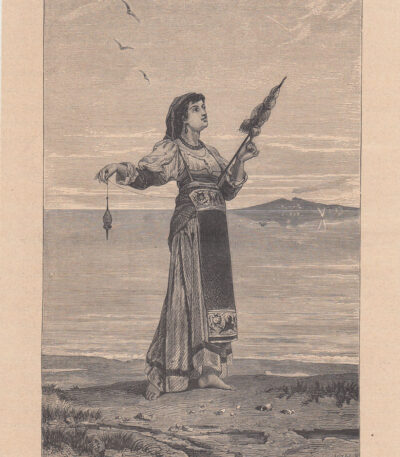
Fanciulla di Salerno, 1875

20,00 

Fanciulla di Salerno It is an engraving made in 1875, che rappresenta una giovane donna dei Monti Salernitani.
This woodcut, taken from the work Italy Pictorial Journey from the Alps to Etna di G. Stieler, E. Paulus e W. Kaden, è stata pubblicata a Milano dai Fratelli Treves, Editori, nel 1885.

  • Engraving size: cm. 20×13 approx.
  • Condition: Excellent
  • Support: Paper
  • Notes: The print has been cut from the book page and will be shipped complete with mat, ready to receive the frame.

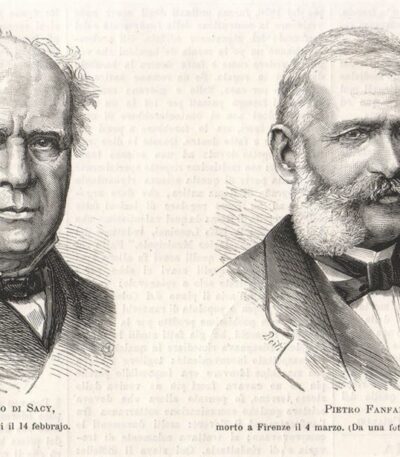
Fanfani Pietro e Silvestro di Sacy, 1887

20,00 

Fanfani Pietro e Silvestro di Sacy è un’incisione realizzata nel 1887, utilizzando la tecnica della woodblock print.
This work is taken from The Italian Illustration, pubblicata dai Fratelli Treves a Milano.

  • Size of the joke: mm. 80×125
  • Margins: almost absent
  • Condition: Excellent
  • Support: Paper

The print was cut from the book and has writing on the back.

Fano, Arch of Augustus, 1890

20,00 

Fano, Arch of Augustus It is a woodcut made in 1890 by the French engraver Charles Petit.
This beautiful print, animated and in excellent condition, measures 10x13 cm and is taken from a French book from the late 19th century.

  • Sheet size: Small
  • Engraving size: cm. 10×13
  • Support: Paper
  • Condition: Excellent

The print has been cut from the book and has writing on the back. The full page containing the print will be sent.

Fano, The Fortress, 1890

20,00 

Fano, The Fortress it's a woodblock print made in 1890, coming from an Italian text from the late nineteenth century.
This work presents a large-sized image cm. 10×12 approximately, surrounded by text and with additional text on the back of the sheet. The complete sheet measures cm. 30×20 and will be shipped in its entirety.

  • Sheet size: cm. 30×20
  • Image size: cm. 10×12
  • Technique: Woodcut
  • Condition: Excellent
  • Support: Paper

Fano, Coat of Arms, 1871

15,00 

Fano, Coat of Arms It is a woodcut made in 1871, taken from the work The Hundred Cities of Italy for Ariodante Manfredi, Milazzo.
This print represents the coat of arms of the city of Fano, with an engraving size of 8x9 cm and small margins.

  • Sheet size: Small
  • Support: Light sheet
  • Condition: Excellent condition
  • Notes: Print extracted from the book with writing on the back

Feltre, 1876

25,00 

Feltre, 1876 it is a woodcut engraving representing the view of Feltre, specifically the Porta Rusteri.
Made in 1876 by K. Stieler and W. Kaden, this work is taken from the volume Italian, published in Stuttgart.

  • Sheet size: mm. 135×187
  • Support: Light paper
  • Condition: Excellent condition
  • Notes: Almost no margins and writing on the back

This print, cut from the book, is a decorative piece that captures the essence of Feltre in the 19th century.

Feltre, Panfilo Castaldi Square, 1890

20,00 

Feltre, Panfilo Castaldi Square it's a woodblock print made in 1890, which represents a historical view of Feltre.
This work is taken from a late nineteenth-century Italian text and features an image measuring approximately 9x12 cm, surrounded by descriptive text.

  • Sheet size: cm. 30×20 approx.
  • Image size: cm. 9×12 approx.
  • Support: Paper
  • Condition: Excellent

Fermo, Town Hall, 1890

20,00 

Stop, Town Hall it's a woodblock print built in 1890, which represents an important testimony of the late nineteenth century in Italy.
This work presents a large-sized image cm. 10×12 approximately, surrounded by text and with additional text on the back of the sheet. The complete sheet measures cm. 30×20 and will be shipped in its entirety.

  • Sheet size: cm. 30×20 approx.
  • Image size: cm. 10×12 approx.
  • Support: Paper
  • Condition: Excellent

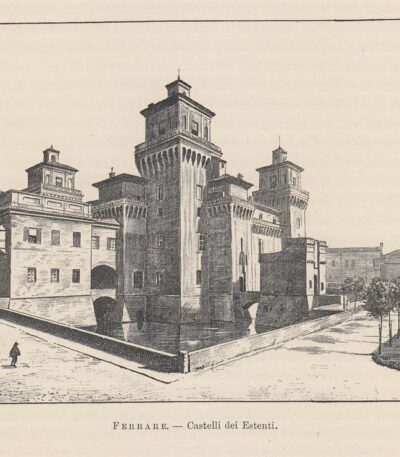
Ferrara, Castles of the Este family, 1890

20,00 

Ferrara, Castelli degli Estensi è una xilografia realizzata nel 1890, incisa da A. Quantin.
This beautiful print, animated and in excellent condition, is taken from a French book from the late 19th century.
The print has been cut from the book and has writing on the back. The full page containing the print will be sent.

  • Sheet size: cm. 10×13 approx.
  • Engraver: A. Quantin, incisore ed editore attivo a Parigi alla fine del XIX secolo
  • Support: Paper

Explore the fascinating world of antique prints

Antique prints are silent witnesses of history, capable of transporting us to distant eras through the art of engraving. Our e-commerce offers a vast selection of these precious finds, carefully selected for their authenticity and artistic value. Whether you are an expert collector or a novice enthusiast, you will find unique pieces here that will enrich your spaces with a touch of timeless elegance.

A safe and rewarding shopping experience

We understand the importance of each individual print and are committed to ensuring a flawless purchasing experience. Our secure payment system and insured shipping with professional packaging ensure that each piece arrives in the best condition. Our expertise in the sector allows us to offer detailed descriptions and personalized advice, helping you to make informed choices. If you have any questions or specific requests, do not hesitate to contact us: we will be happy to guide you into the wonderful world of antique prints.