Ancient Foreign Masters

Showing 265–288 of 703 results

David Deuchar, Emperor, 1803

40,00 

Emperor It is an engraving made by David Deuchar in 1803, inspired by the famous theme of the Dance of Death.
This work is part of the volume The Dances of Death through the various stages of human life, with the original drawings by Hans Holbein.

  • Sheet size: cm. 20×16 approx.
  • Engraving size: cm. 11×9 approx.
  • Support: Laid paper
  • Condition: Excellent state of preservation

David Deuchar, The Expulsion, 1803

45,00 

The Expulsion It is an engraving made by David Deuchar in 1803, inspired by the theme of the Dance of Death.
This work is taken from the volume The Dances of Death through the various stages of human life, with the original drawings by Hans Holbein.

  • Sheet size: cm. 20×16 approx.
  • Engraving size: cm. 11×9 approx.
  • Support: Laid paper
  • Condition: Excellent state of preservation

David Deuchar, The Countess, 1803

40,00 

The Countess It is an engraving made by David Deuchar in 1803, part of the famous theme of the Dance of Death.
This work comes from the volume The Dances of Death through the various stages of human life, with the original drawings by Hans Holbein.

  • Sheet size: cm. 20×16 approx.
  • Engraving size: cm. 11×9 approx.
  • Support: Laid paper
  • Condition: Excellent state of preservation

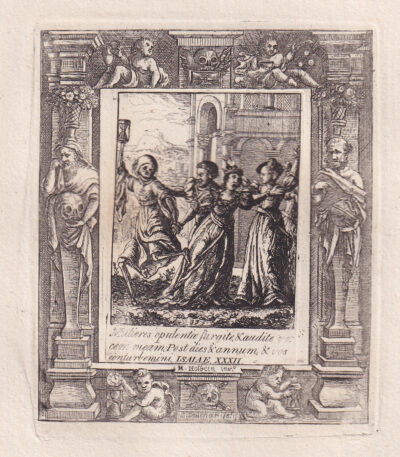
David Deuchar, The Duchess, 1803

40,00 

The Duchess It is an engraving made by David Deuchar in 1803, inspired by the famous theme of the Dance of Death.
This work is taken from the volume The Dances of Death through the various stages of human life, with the original drawings by Hans Holbein.

  • Sheet size: cm. 20×16 approx.
  • Engraving size: cm. 11×9 approx.
  • Support: Laid paper
  • Condition: Excellent state of preservation

David Deuchar, The Novice, 1803

40,00 

The Novice and Death It is an engraving made by David Deuchar in 1803, inspired by the famous theme of the Dance of Death.
This work comes from the volume The Dances of Death through the various stages of human life, with the original drawings by Hans Holbein.

  • Sheet size: cm. 20×16 approx.
  • Engraving size: cm. 11×9 approx.
  • Support: Laid paper
  • Condition: Excellent state of preservation

David Deuchar, The Queen, 1803

40,00 

The Queen It is an engraving made by David Deuchar in 1803, part of the famous theme of the Dance of Death.
This work comes from the volume The Dances of Death through the various stages of human life, with the original drawings by Hans Holbein.

  • Sheet size: cm. 20×16 approx.
  • Engraving size: cm. 11×9 approx.
  • Support: Laid paper
  • Condition: Excellent state of preservation

David Deuchar, Monk Reading the Bible, 1786

80,00 

Monk reading the Bible It is an engraving made by David Deuchar in 1786, which represents a monk immersed in reading the Bible in his cell.
This work is part of the collection A Collection of Etchings after the most Eminent Master of the Dutch and Flemish Schools, which includes works by artists such as Rembrandt, Ostade, Cornelius Bega and Van Vliet.

  • Sheet size: cm. 35×26 approx.
  • Engraving size: cm. 13,5×10,5 approx.
  • Technique: Etching
  • Support: Very thin paper back-glued on heavy straw-colored paper
  • Condition: Excellent

David Deuchar, Portrait, 1803

35,00 

Portrait of Deuchar it is an engraving made in 1803, part of the famous volume The Dances of Death through the various stages of human life, with the original drawings of Hans Holbein.
Engraved by D. Deuchar In London, this work represents an important artistic testimony of the period.

  • Sheet size: cm. 20×16 approx.
  • Engraving size: cm. 11×9 approx.
  • Support: Laid paper
  • Condition: Excellent state of preservation

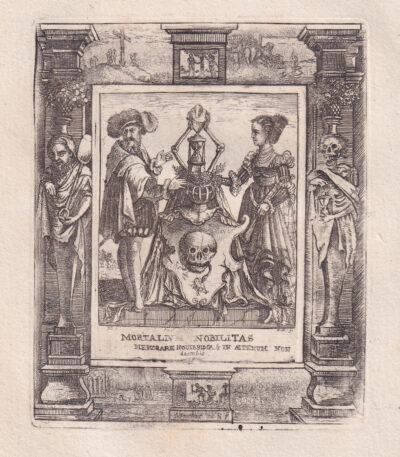
David Deuchar, Coat of Arms, 1803

40,00 

Coat of Arms of Death It is an engraving made by David Deuchar in 1803, part of the famous volume The Dances of Death through the various stages of human life, with the original drawings by Hans Holbein.
This work represents an important reflection on Human Dignity and the universal theme of death.

  • Sheet size: cm. 20×16 approx.
  • Engraving size: cm. 11×9 approx.
  • Support: Laid paper
  • Condition: Excellent state of preservation

David Deuchar, Drunkards, 1803

40,00 

Drunkards It is an engraving made by David Deuchar in 1803, inspired by the theme of the Dance of Death.
This work is part of the volume The Dances of Death through the various stages of human life, with the original drawings by Hans Holbein.

  • Sheet size: cm. 20×16 approx.
  • Engraving size: cm. 11×9 approx.
  • Support: Laid paper
  • Condition: Excellent state of preservation

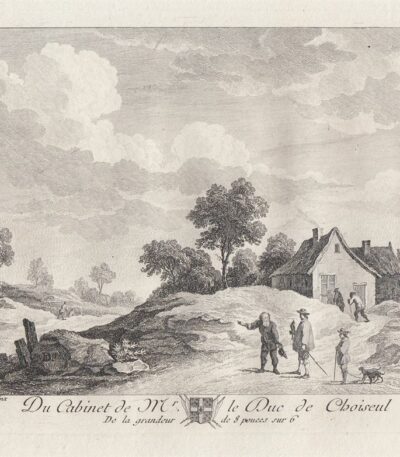
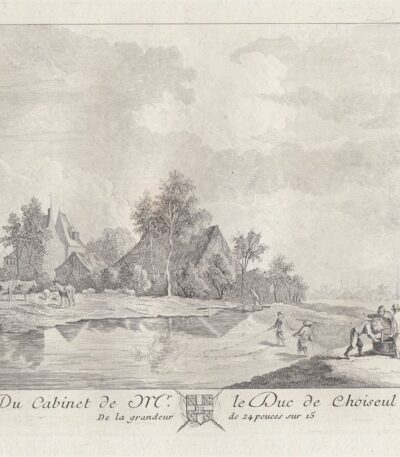
David Teniers, Basan, 1771

30,00 

David Teniers, Basan, 1771 è un’incisione realizzata da Pierre-François Basan, che riproduce opere del celebre pittore fiammingo David Teniers il Giovane.
This engraving is part of the volume Cabinet of the Duke of Choiseul, un’importante raccolta di stampe incise da opere del Duc de Choiseul, pubblicata a Parigi nel 1771.

  • Sheet size: cm. 30×20 approx.
  • Engraving size: cm. 17×14 approx.
  • Technique: Etching
  • Support: Laid paper
  • Condition: Excellent condition

David Teniers, Basan, 1771

30,00 

David Teniers, Basan, 1771 è un’incisione realizzata da Pierre-François Basan, che rappresenta un’opera del famoso pittore fiammingo David Teniers il Giovane.
Questa incisione fa parte del Cabinet of the Duke of Choiseul, un’importante raccolta di stampe incise da opere del Ducato di Choiseul, pubblicata a Parigi nel 1771.

  • Sheet size: cm. 30×20 approx.
  • Engraving size: cm. 17×14 approx.
  • Technique: Etching
  • Support: Laid paper
  • Condition: Excellent condition

David Teniers, Basan, 1771

30,00 

David Teniers, Basan, 1771 It is an engraving made by Pierre-François Basan, published in 1771.
This work is part of the Cabinet of the Duke of Choiseul, un’importante raccolta di stampe incise basate sui dipinti del Ducato.

  • Sheet size: cm. 30×20 approx.
  • Engraving size: cm. 17×14 approx.
  • Technique: Etching
  • Support: Laid paper
  • Condition: Excellent

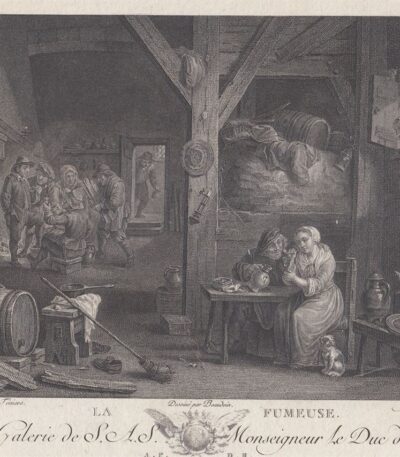
David Teniers, La Fumatrice, 1786

50,00 

La Fumatrice è un’incisione realizzata da David Teniers nel 1786.
Questa opera è un’acquaforte su carta vergellata, senza filigrana, che misura cm. 24×37, inclusa la cornice editoriale.

  • Taken from: Gallery of the Palais Royal
  • Description: Gravée d’après les tableaux des différentes écoles qui la composent, con un abrégé de la vie des peintres e una descrizione storica di ogni quadro da parte di Mr l’abbé de Fontenai.
  • Dedication: To HSH Monseigneur le Duc d'Orléans, Premier Prince du Sang
  • Publisher: J. Couche; Paris; 1786
  • Condition: Excellent condition, nice proof with good contrast

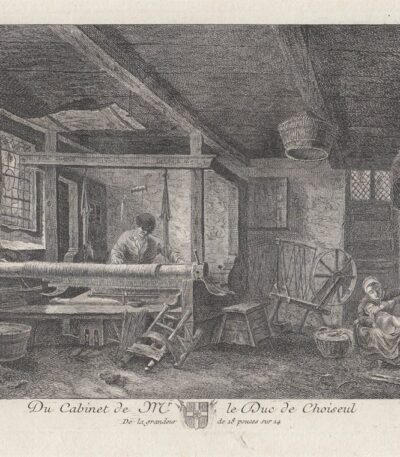
Deckert, Basan, Al telaio, 1771

30,00 

Deckert, Basan, Al telaio è un’incisione realizzata nel 1771, parte del Cabinet of the Duke of Choiseul.
This work is a collection of prints che raccoglie incisioni basate sui dipinti del cabinet di Monseigneur le Duc de Choiseul, edito da Pierre-François Basan.

  • Sheet size: cm. 30×20 approx.
  • Engraving size: cm. 17×14 approx.
  • Support: Laid paper
  • Condition: Excellent state of preservation

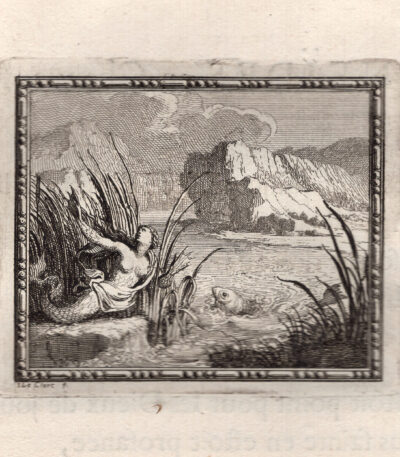
Dercette e Nais trasformati in pesci, Metamorfosi di Ovidio, acquaforte del 1676

30,00 

Questa splendida incisione del 1676 proviene dalla prestigiosa edizione delle “Métamorphoses d’Ovide en rondeaux” Of Isaac de Benserade, un’opera di grande raffinatezza, commissionata da Luigi XIV per l’educazione del Delfino di Francia.

Descrizione dell’opera

  • Titolo: Stampa tratta da Les Métamorphoses d’Ovide en rondeaux

  • Author: Isaac de Benserade (testo), Le Clerc, Chauveau e Le Brun (incisioni)

  • Publisher: De l’Imprimerie Royale, Parigi, 1676

  • Technique: Acquaforte su carta vergellata (testo al verso)

  • Dimensions:

    • Incisione: cm 7,5 × 9 (alla battuta del rame)

    • Foglio: cm 27 × 20

Importanza storica e artistica

L’opera di Benserade è una delle più celebri reinterpretazioni seicentesche delle Ovid's Metamorphoses. La particolarità di questa edizione è il suo approccio didattico ed estetico: ogni mito è presentato attraverso una citazione in latino, una riscrittura in versi (i rondeaux, tipici componimenti poetici francesi) e un’incisione su rame che illustra la scena.

Le incisioni furono realizzate da tre importanti artisti dell’epoca:

  • Sébastien Le Clerc (1637-1714), incisore di corte del Re Sole

  • François Chauveau (1613-1676), celebre illustratore parigino

  • Charles Le Brun (1619-1690), pittore ufficiale di Luigi XIV

Questa stampa rappresenta un esempio straordinario di arte barocca, caratterizzata da un tratto preciso e dettagliato, che enfatizza la drammaticità e il dinamismo delle scene mitologiche.

Valore collezionistico

L’opera, stampata presso l’Imprimerie Royale, è una testimonianza del lusso e della raffinatezza della cultura francese sotto Luigi XIV. Le incisioni, realizzate con grande maestria, sono oggi oggetti di culto tra i collezionisti di ancient books, incisioni del XVII secolo And iconografia mitologica.

Un pezzo di altissimo valore storico e artistico, espressione della grande tradizione incisoria francese e dell’interesse del Re Sole per l’arte e la letteratura classica.

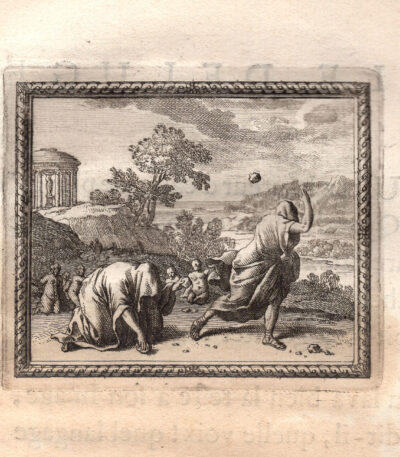
Deucalione e Pirra, Metamorfosi di Ovidio, acquaforte del 1676

30,00 

Questa splendida incisione del 1676 proviene dalla prestigiosa edizione delle “Métamorphoses d’Ovide en rondeaux” Of Isaac de Benserade, un’opera di grande raffinatezza, commissionata da Luigi XIV per l’educazione del Delfino di Francia.

Descrizione dell’opera

  • Titolo: Stampa tratta da Les Métamorphoses d’Ovide en rondeaux

  • Author: Isaac de Benserade (testo), Le Clerc, Chauveau e Le Brun (incisioni)

  • Publisher: De l’Imprimerie Royale, Parigi, 1676

  • Technique: Acquaforte su carta vergellata (testo al verso)

  • Dimensions:

    • Incisione: cm 7,5 × 9 (alla battuta del rame)

    • Foglio: cm 27 × 20

Importanza storica e artistica

L’opera di Benserade è una delle più celebri reinterpretazioni seicentesche delle Ovid's Metamorphoses. La particolarità di questa edizione è il suo approccio didattico ed estetico: ogni mito è presentato attraverso una citazione in latino, una riscrittura in versi (i rondeaux, tipici componimenti poetici francesi) e un’incisione su rame che illustra la scena.

Le incisioni furono realizzate da tre importanti artisti dell’epoca:

  • Sébastien Le Clerc (1637-1714), incisore di corte del Re Sole

  • François Chauveau (1613-1676), celebre illustratore parigino

  • Charles Le Brun (1619-1690), pittore ufficiale di Luigi XIV

Questa stampa rappresenta un esempio straordinario di arte barocca, caratterizzata da un tratto preciso e dettagliato, che enfatizza la drammaticità e il dinamismo delle scene mitologiche.

Valore collezionistico

L’opera, stampata presso l’Imprimerie Royale, è una testimonianza del lusso e della raffinatezza della cultura francese sotto Luigi XIV. Le incisioni, realizzate con grande maestria, sono oggi oggetti di culto tra i collezionisti di ancient books, incisioni del XVII secolo And iconografia mitologica.

Un pezzo di altissimo valore storico e artistico, espressione della grande tradizione incisoria francese e dell’interesse del Re Sole per l’arte e la letteratura classica.

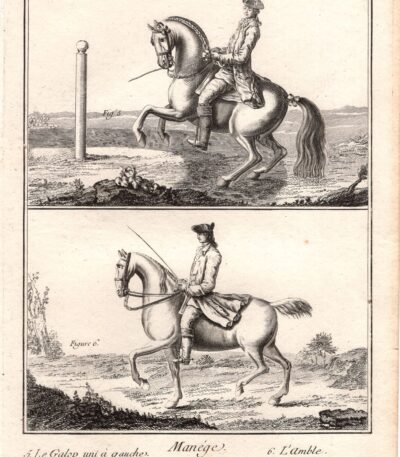
Diderot and D'Alembert, 1778, Horse riding, horse, riding school

25,00 

Diderot e D’Alembert, 1778, Equitazione è un’incisione affascinante che esplora il tema dell’equitazione e del maneggio.
This work is taken from the important Encyclopedie ou Dictionnaire Universel Raisonné des connaissances, edited by Fortunato Bartolomeo De Felice.

  • Sheet size: cm. 24×18
  • Support: Medium thickness laid paper with white backing
  • Condition: Good condition
  • Place of publication: Yverdon

Questa incisione, realizzata nel 1771 e tirata nel 1778, è parte dell’edizione dell’Enciclopedia di Diderot e D’Alembert, nota come Yverdon Encyclopedia.
Si distingue per il suo approccio meno francese e meno antireligioso, guadagnandosi il soprannome di enciclopedia protestante e una notevole diffusione nel Nord Europa.

Diderot and D'Alembert, 1778, Horsemanship, Horse, The Capriole

25,00 

Diderot e D’Alembert, Equitazione It is an engraving made by Fortunate Bartholomew De Felice nel 1778, tratta dall’importante opera Encyclopedia or Dictionnaire Universel Raisonné des connoissance….
Questa incisione, dedicata all’arte dell’equitazione e alla figura del cavallo, è parte dell’edizione nota come Yverdon Encyclopedia, published in Switzerland.

  • Sheet size: cm. 24×18
  • Support: Medium thickness laid paper with white backing
  • Condition: Good condition, with white back
  • Place of publication: Yverdon

Diderot and D'Alembert, 1778, Riding, horse, the groupade

25,00 

Diderot e D’Alembert, 1778 – Equitazione, cavallo, la groupade è un’incisione affascinante che esplora il tema dell’equitazione.
Tratta dall’importante opera Encyclopedia or Dictionnaire Universel Raisonné des connoissance…, questa incisione è stata realizzata da Fortunato Bartolomeo De Felice, noto per il suo contributo all’edizione dell’Enciclopedia di Diderot e D’Alembert.

  • Sheet size: cm. 24×18
  • Support: Medium thickness laid paper with white backing
  • Condition: Good condition, with white back
  • Place of publication: Yverdon
  • Era: 1771 (engraving), 1778 (print run)

Questa incisione è parte dell’edizione dell’Enciclopedia d’Yverdon, nota per la sua diffusione nel Nord Europa, grazie al suo approccio meno francese e meno antireligioso rispetto all’originale di Diderot e d’Alembert.

Diderot and D'Alembert, 1778, Riding, horse, la pescade, la courbette

25,00 

Diderot e D’Alembert, 1778 – Equitazione è un’incisione che esplora le tecniche equestri, in particolare il passaggio, la pesade e la courbette.
This work is taken from the Encyclopedia or Dictionnaire Universel Raisonné des connoissance…, edited by Fortunato Bartolomeo De Felice.

  • Sheet size: cm. 24×18
  • Support: Medium thickness laid paper with white backing
  • Condition: Good condition, with white back

L’incisione è parte dell’edizione dell’Enciclopedia di Diderot e D’Alembert, nota come Yverdon Encyclopedia, published in Switzerland.
Questa edizione, meno influenzata dalle idee francesi e antireligiose, è conosciuta come enciclopedia protestante e ha avuto una notevole diffusione nel Nord Europa.

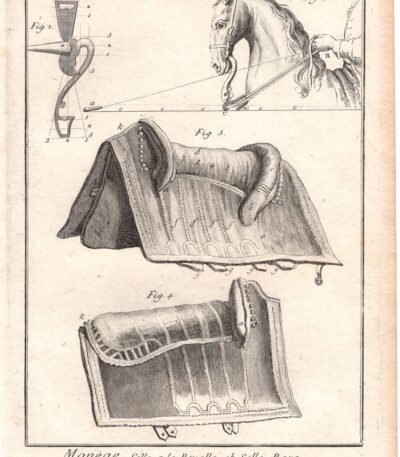
Diderot and D'Alembert, 1778, Horsemanship, horse, the saddle

25,00 

Diderot e D’Alembert, Equitazione it is an engraving made by Fortunato Bartolomeo De Felice in 1778, taken from the important work Encyclopedia or Dictionnaire Universel Raisonné des connoissance….
Questa incisione, che rappresenta un tema legato all’equitazione e alla sella, è parte della famosa edizione dell’enciclopedia curata da De Felice, nota come Yverdon Encyclopedia, published in Switzerland.

  • Sheet size: cm. 24×18
  • Technique: Etching
  • Support: Medium thickness laid paper with white backing
  • Condition: Good condition

Diderot and D'Alembert, 1778, Horsemanship, horse, the piafer

25,00 

Diderot e D’Alembert, Equitazione it is an engraving made by Fortunato Bartolomeo De Felice in 1778, taken from the important work Encyclopedia or Dictionnaire Universel Raisonné des connoissance….
Questa incisione rappresenta un interessante studio sull’equitazione e il cavallo, ed è parte dell’edizione nota come Yverdon Encyclopedia, published in Switzerland.

  • Sheet size: cm. 24×18
  • Support: Medium thickness laid paper with white backing
  • Condition: Good condition, with white back

Questa edizione si distingue per il suo approccio meno francese e meno antireligioso rispetto all’originale di Diderot e d’Alembert, guadagnandosi il soprannome di enciclopedia protestante e assicurando una forte diffusione nel Nord Europa.

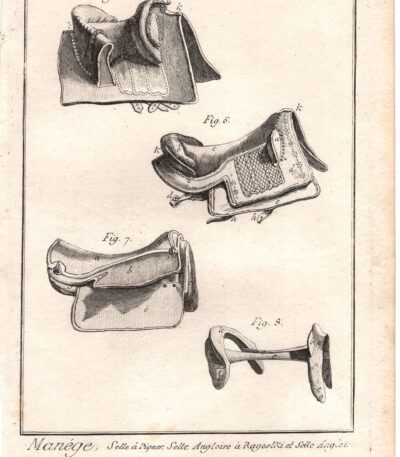
Diderot and D'Alembert, 1778, Horsemanship, Horse, English Saddles

25,00 

Diderot e D’Alembert, 1778, Equitazione è un’incisione di Fortunato Bartolomeo De Felice, realizzata nel contesto della celebre Encyclopedia or Dictionnaire Universel Raisonné des connoissance….
Questa opera, dedicata all’arte dell’equitazione e alle selle inglesi, è parte dell’edizione dell’enciclopedia curata da De Felice, nota come Yverdon Encyclopedia, published in Switzerland.

  • Sheet size: cm. 24×18
  • Support: Medium thickness laid paper with white backing
  • Condition: Good condition, with white back
  • Place of publication: Yverdon
  • Era: 1771 (engraving), 1778 (print run)

Questa incisione si distingue per il suo approccio meno francese e meno antireligioso rispetto all’originale di Diderot e D’Alembert, guadagnandosi il soprannome di enciclopedia protestante e contribuendo alla sua diffusione nel Nord Europa.

Explore the fascinating world of antique prints

Antique prints are silent witnesses of history, capable of transporting us to distant eras through the art of engraving. Our e-commerce offers a vast selection of these precious finds, carefully selected for their authenticity and artistic value. Whether you are an expert collector or a novice enthusiast, you will find unique pieces here that will enrich your spaces with a touch of timeless elegance.

A safe and rewarding shopping experience

We understand the importance of each individual print and are committed to ensuring a flawless purchasing experience. Our secure payment system and insured shipping with professional packaging ensure that each piece arrives in the best condition. Our expertise in the sector allows us to offer detailed descriptions and personalized advice, helping you to make informed choices. If you have any questions or specific requests, do not hesitate to contact us: we will be happy to guide you into the wonderful world of antique prints.