English (UK)
  Italiano
  Français



Costumes
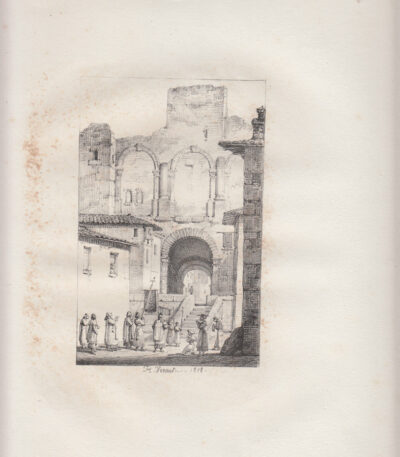
Horace Vernet, Procession, 1818
40,00 €Procession It is a lithograph made by Horace Vernet in 1818.
This work represents a procession scene, signed on the plate in the centre with the inscription H.Vernet…1818.
- Sheet size: cm. 33×27 approx.
- Engraving size: cm. 11×15 approx.
- Support: Strong paper with white back
- Condition: Good condition, with some sporadic stains that do not affect the engraving
Emile Jean Horace Vernet (Paris, 30 June 1789 – Paris, 17 January 1863) was a French painter and photographer, known for his battle scenes and oriental subjects, following the artistic tradition of his family.

I Ciarlatani, Scena di costumi dell’Italia Meridionale, 1843
20,00 €Xilografia realizzata nel 1843, estratta dal volume Pictorial Cosmorama, Anno nono, ed è caratterizzata da margini quasi assenti.
- Sheet size: cm. 28×20 approx.
- Dimensione della immagine: cm. 15×18 approx.
- Technique: Woodcut
- Condition: buona, scritto al verso del foglio, in parte visibile al recto.
- Support: Paper
La stampa è stata estratta dal libro e presenta scritte al verso in parte visibili, viene spedita la pagina intera che contiene la stampa .
Pictorial Cosmorama fu una rivista illustrata fondata a Milano da Giovanni Francesco Zini, avvocato. Molti degli esponenti della società artistico-letteraria milanese (Carlo Tenca, Alessandro Lampugnani nonché un esordiente Antonio Ghislanzoni) si accostarono al giornalismo facendo le prime esperienze sul «Cosmorama Pittorico», che ebbe il merito di essere la prima rivista in cui le illustrazioni ricoprirono un ruolo importante (novità questa che fu rimproverata da Carlo Cattaneo, che pure fu un collaboratore assiduo). Dopo il 1848 la rivista entrò in crisi e fu chiusa.
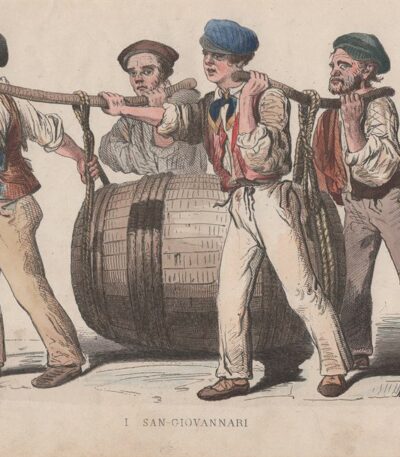
I San Giovannari, P.Mattei, 1853
60,00 €I San Giovannari è un’incisione realizzata da Pasquale Mattei nel 1853, eseguita con la tecnica del Burin and enriched with a delicate watercolor.
This work is taken from the volume Customs and Traditions of Naples and Surrounding Areas by Francesco De Bourcard.
- Sheet size: cm. 17×25 approx.
- Support: Medium paper, white back
- Condition: Excellent state of preservation
L’incisione è firmata in lastra da Pas. Mattei e Giov. Fusaro, e si tratta di un’opera originale, non una copia anastatica.
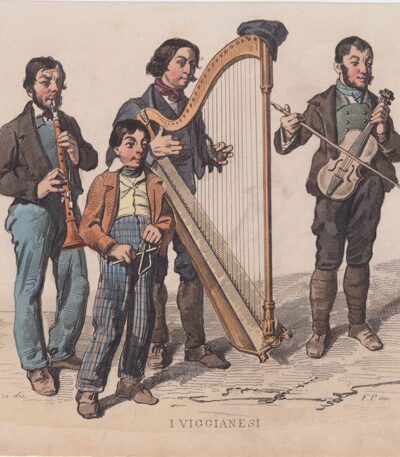
I Viggianesi, F.Palizzi, 1853
60,00 €I Viggianesi It is an engraving made by Philip Palizzi in 1853, performed with the technique of Burin e arricchita da un delicato delineato acquarellato.
This work is taken from the volume Customs and Traditions of Naples and Surrounding Areas by Francesco De Bourcard.
- Sheet size: cm. 17×25 approx.
- Condition: Perfect state of preservation
- Support: Medium paper, white back
- Signed on the plate: Fil.Palizzi dis., inc. Igino Oruvasfan
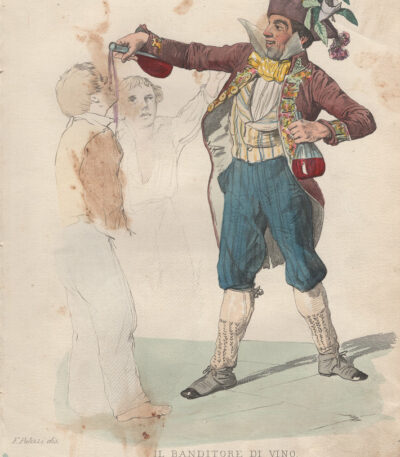
Il banditore di vino, F.Palizzi, 1853
50,00 €Il Banditore di Vino It is an engraving made by Philip Palizzi In the 1853.
This work, performed with the technique of Burin e caratterizzata da un delineato acquarellato, rappresenta un momento significativo della vita sociale napoletana.
- Sheet size: cm. 17×25 approx.
- Support: Medium paper, white back
- Condition: Buone, con alcune macchie diffuse visibili
The engraving is taken from Customs and Traditions of Naples and Surrounding Areas by Francesco De Bourcard.
Questo banditore era un antesignano della moderna pubblicità, avvistato per le strade durante l’apertura di nuove cantine o all’arrivo di botti nuove.
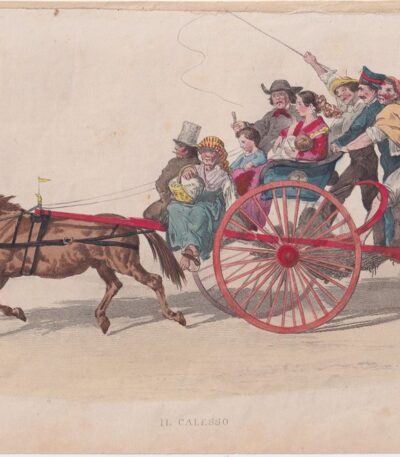
Il Calesso, F.Palizzi, 1853
60,00 €Il Calesso It is an engraving made by Philip Palizzi In the 1853.
This work, performed with the technique of Burin al delineato acquarellato, è un’affascinante rappresentazione dei usi e costumi di Napoli e contorni, tratta dall’opera di Francis De Bourcard.
- Sheet size: cm. 17×25 approx.
- Condition: Perfect state of preservation
- Support: Medium paper, white back
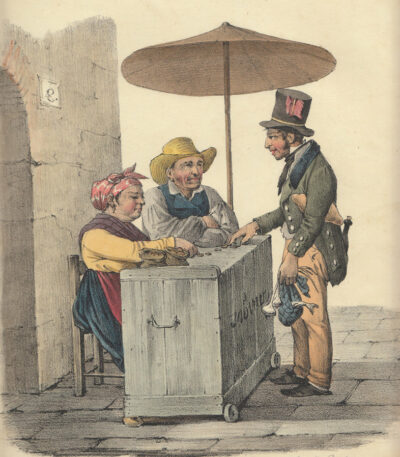
The Money Changer, 1827
140,00 €The Money Changer It is a watercolour lithograph made in 1827 by Hjalmar Morner, with lithography by Cuciniello and Bianchi.
This piece is part of the collection The new collection of scenes and costumes of Naples, published by Messrs. Cuciniello and Bianchi.
- Sheet size: cm. 27×38 approx.
- Condition: Fair general condition, with some small tears at the edges that do not affect the print
- Support: Paper
- Characteristics: Neapolitan subject masterfully represented, rare for collectors
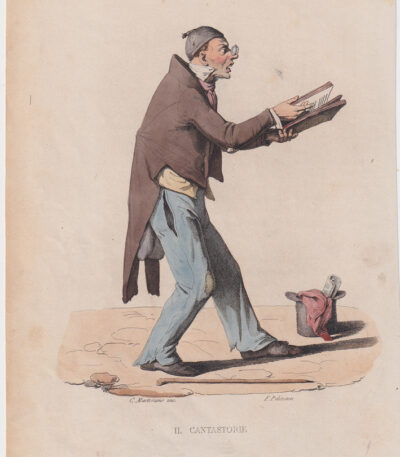
Il cantastorie, F.Palizzi, 1853
60,00 €Il Cantastorie It is an engraving made by F. Palizzi In the 1853.
This work is an example of Bulino al delineato acquarellato, su carta media, con retro bianco.
Firmata in lastra con la dicitura Fil.Palizzi diresse., inc. Martorana, presents a sheet size of cm. 17×25.
It is taken from the volume Customs and Traditions of Naples and Surrounding Areas Of Francis De Bourcard, edizione del 1853.
- Condition: Perfect state of preservation
- Support: Medium paper
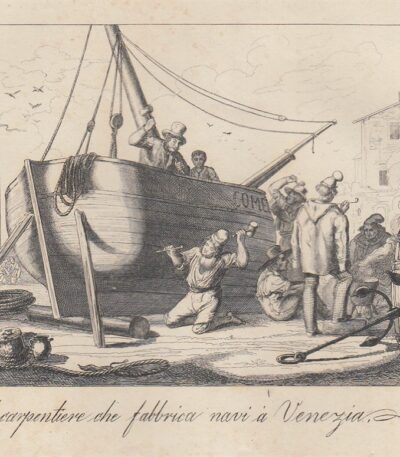
Il Carpentiere che fabbrica Navi a Venezia, 1840
20,00 €Il Carpentiere che fabbrica Navi a Venezia è un’incisione realizzata nel 1840 da W. Gail.
This work, performed with the technique of burin, rappresenta un affascinante soggetto legato all’arte della carpenteria navale a Venezia.
- Sheet size: mm. 230×140
- Engraving size: mm. 105×70
- Support: Light paper
- Condition: Perfect state of preservation
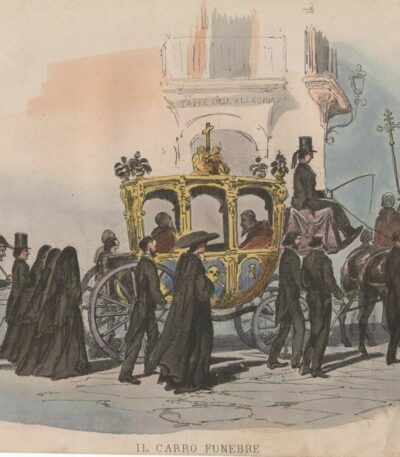
Il carro funebre, Duclere, 1853
60,00 €Il Carro Funebre è un’incisione realizzata nel 1853 da Duclere, con il contributo di Giov. Fusaro.
This work is a burin al delineato acquarellato d’epoca, stampata su carta media con retro bianco.
- Sheet size: cm. 17×25 approx.
- Condition: Excellent state of preservation
- Origine: Tratto da Customs and Traditions of Naples and Surrounding Areas di Francesco De Bourcard, 1853
Si tratta di un’opera originale e non di una copia anastatica.

Il Casotto dei Burattini in Roma, Pinelli, 1840
25,00 €Il Casotto dei Burattini in Roma It is an engraving made by Bartholomew Pinelli in 1840.
This unsigned work is an example of burin engraving su rame, che cattura una scena vivace e animata con numerosi personaggi.
Taken from FROMMEL, Picturesque Italy, pubblicato a Lipsia nel 1840, questa incisione è un’importante testimonianza della vita e dei costumi romani dell’epoca.
- Sheet size: mm. 230×140
- Engraving size: mm. 105×70
- Support: Light paper
- Condition: Excellent state of preservation
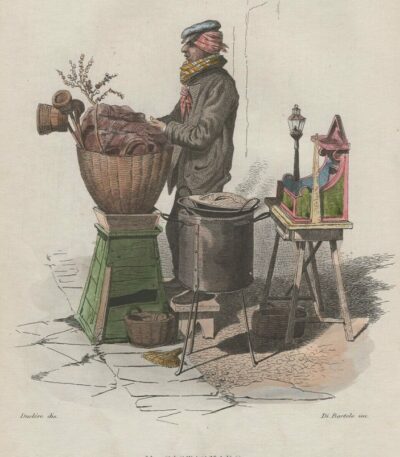
Il castagnaro, Duclere, 1853
60,00 €Il Castagnaro è un’incisione realizzata nel 1853 da Duclere, con la collaborazione di Di Bartolo.
This work, performed with the technique of Burin e arricchita da un delicato acquarello, è stampata su carta media con retro bianco.
- Sheet size: cm. 17×25 approx.
- Condition: Perfect state of preservation
- Support: Paper
L’incisione è tratta dall’opera Customs and Traditions of Naples and Surrounding Areas di Francesco De Bourcard, pubblicata nel 1853.
Si precisa che non si tratta di una copia anastatica.
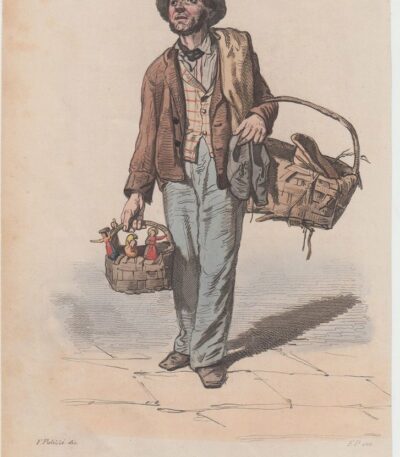
Il Cenciaiuolo, F.Palizzi, 1853
60,00 €Il Cenciaiuolo It is an engraving made by Philip Palizzi nel 1853, un’opera che cattura l’essenza della vita quotidiana a Napoli.
Questa incisione è un esempio di Burin al delineato acquarellato, su carta di qualità media, con retro bianco.
- Sheet size: cm. 17×25 approx.
- Condition: Perfect state of preservation
- Support: Paper
L’opera è firmata in lastra e proviene dal volume Customs and Traditions of Naples and Surrounding Areas di Francesco De Bourcard, pubblicato nel 1853. Si tratta di un’opera originale e non di una copia anastatica.
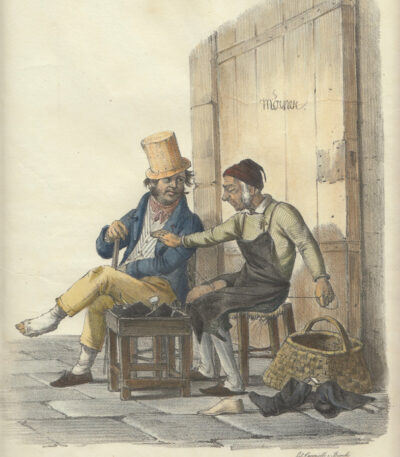
Il ciabattino, 1827
140,00 €The Cobbler è una litografia acquerellata realizzata nel 1827, con disegno di Hjalmar Morner e litografia di Cuciniello e Bianchi.
This work is part of the collection The new collection of scenes and costumes of Naples, edita dai signori Cuciniello e Bianchi, vico S.Anna di Palazzo n.38.
- Sheet size: cm. 27×38 approx.
- Condition: Fair general condition, with some small tears at the edges that do not affect the print
- Support: Paper
- Characteristics: Neapolitan subject masterfully represented, rare for collectors
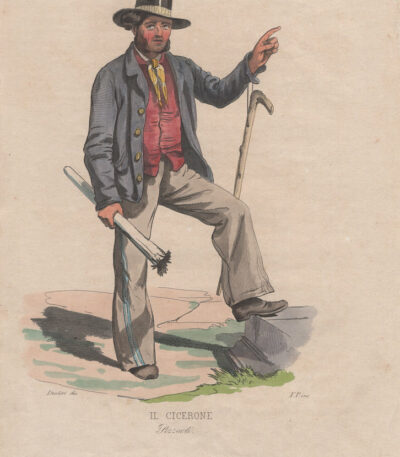
Il cicerone, Duclere, 1853
60,00 €Il Cicerone è un’incisione realizzata da Duclere nel 1853, eseguita con la tecnica del Burin e presentata in un elegante watercolor.
This work is taken from Customs and Traditions of Naples and Surrounding Areas by Francesco De Bourcard.
- Sheet size: cm. 17×25 approx.
- Support: Medium paper, white back
- Condition: Perfect state of preservation
La figura del cicerone, fondamentale per i forestieri che visitavano Pozzuoli, era regolamentata da un articolato sistema di polizia che disciplinava il loro lavoro e le tariffe. Questo pezzo rappresenta un’importante testimonianza storica di quel periodo.
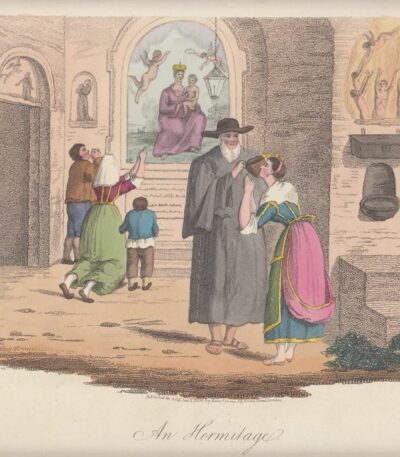
The Convent, 1806
30,00 €The Convent it is an engraving made in 1806, representing a hermitage.
This work is a etching and colored aquatint with watercolor, printed on thick white paper on the verso.
- Sheet size: cm. 27×35
- Support: Paper
- Condition: Excellent condition
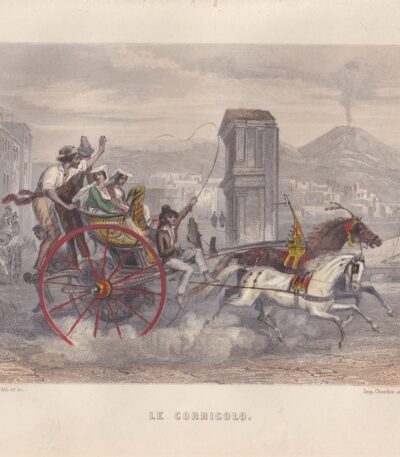
Il Corricolo, 1856
40,00 €Il Corricolo è una finissima incisione al bulino realizzata nel 1856, che rappresenta i costumi tradizionali napoletani.
This work is taken from the volume Picturesque voyage in southern Italy by M. Paul De Musset, published in Paris by Morizot editeur.
- Sheet size: cm. 17×26 approx.
- Engraving size: cm. 12×17 approx.
- Support: Heavy paper
- Condition: Excellent state of preservation
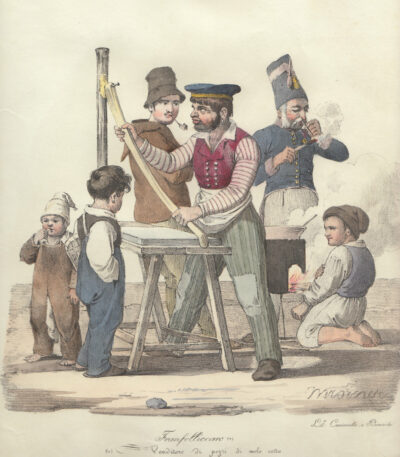
Il franfelliccaro, Venditore di Caramelle, 1827
140,00 €Il franfelliccaro, Venditore di Caramelle It is a watercolour lithograph made in 1827 by Hjalmar Morner, with lithography by Cuciniello and Bianchi.
This piece is part of the collection The new collection of scenes and costumes of Naples, ed è un caratteristico soggetto napoletano magistralmente rappresentato.
- Sheet size: cm. 27×38 approx.
- Condition: Fair general condition, with some small tears at the edges that do not affect the print
- Support: Paper
- Rarity: Raro per collezionisti

Il Friggitore, Bartolomeo Pinelli, 1840
25,00 €Il Friggitore It is an engraving made by Bartholomew Pinelli nel 1840, parte della serie Costumi di Roma.
Questa opera, non firmata, è un’incisione al burin su rame che rappresenta una vivace scena con numerosi personaggi, catturando l’essenza della vita quotidiana a Roma.
- Sheet size: mm. 230×140
- Engraving size: mm. 105×70
- Support: Light paper
- Condition: Excellent state of preservation
This engraving is taken from FROMMEL, Picturesque Italy, published in Leipzig in 1840.
Bartolomeo Pinelli, noto per la sua vasta produzione artistica, ha illustrato i costumi dei popoli italiani e ha contribuito significativamente alla documentazione etnografica di Roma.
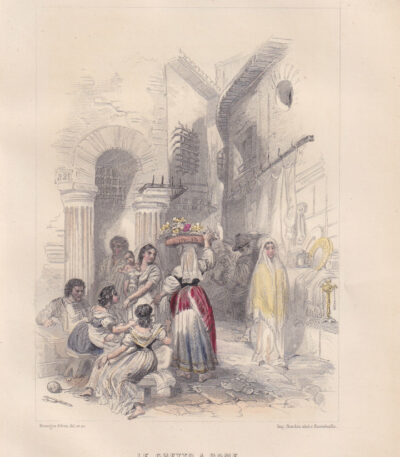
Il Ghetto a Roma, 1856
35,00 €Il Ghetto a Roma it's a very fine burin engraving su acciaio, realizzata nel 1856 da Rouargue freres.
Questa opera è acquarellata e proviene dal volume Picturesque voyage in southern Italy, written by M. Paul De Musset and published in Paris by Morizot editeur.
- Sheet size: cm. 17×26 approx.
- Engraving size: cm. 12×17 approx.
- Support: Heavy paper
- Condition: Perfect state of preservation

The Game of Morra, 1835
30,00 €Il Gioco della Morra è un’incisione realizzata da Rouargue nel 1835, eseguita con la tecnica del burin on steel.
This work is taken from the volume Italy, Sicily, the Aeolian Islands, Elba Island, Sardinia, Malta, Calypso Island etc. by AUDOT père, published between 1835 and 1837.
- Sheet size: mm. 160×245
- Size of the joke: mm. 132×182
- Support: Medium paper
- Condition: Excellent state of preservation
L’incisione rappresenta un bel soggetto con numerosi personaggi e avventori in caratteristici costumi dell’epoca che si dedicano al gioco della morra.

The Game of Morra, B. Pinelli, 1840
25,00 €The Game of Morra It is an engraving made by Bartholomew Pinelli in 1840, which captures a lively scene of Roman life with numerous characters.
This unsigned work was executed in burin on copper and is part of the volume FROMMEL, Picturesque Italy, published in Leipzig in 1840.
- Sheet size: mm. 230×140
- Engraving size: mm. 105×70
- Support: Light paper
- Condition: Excellent state of preservation

The Game of Bowls, B. Pinelli, 1840
25,00 €The Game of Boccia It is an engraving made by Bartolomeo Pinelli in 1840, which captures a lively gambling scene in Rome.
This unsigned work is an example of Pinelli's mastery in representing the customs and daily life of Italians.
- Sheet size: mm. 230×140
- Engraving size: mm. 105×70
- Technique: Burin
- Support: Light paper
- Condition: Perfect state of preservation

The Spanish Guerrilla, Leitghton Brothers
30,00 €The Spanish Guerrilla It is a chromolithograph made by the Leitghton Brothers in the 20th century.
This work is distinguished by its lively representation and the use of bright colours, typical of the chromolithography technique.
- Sheet size: cm. 22×15 approx.
- Support: Thick paper, white back
- Condition: Excellent