English (UK)
  Italiano
  Français



Woodcut
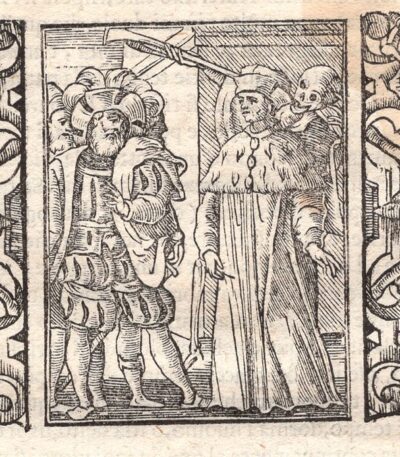
Fabio Glissenti, Il Nobile e la Morte, 1596
35,00 €Il Nobile e la Morte It is an engraving made by Fabio Glissenti in 1596, taken from the work Athanatophilia, inspired by the famous Dance of Death by Hans Holbein.
Questa stampa fa parte di un ciclo di immagini che affrontano il tema della morte con un approccio a volte ironico e irriverente.
- Sheet size: cm. 21×15 approx.
- Image size: cm. 6,5×10 circa
- Technique: Woodcut
- Condition: Excellent
- Support: Paper
Glissenti, medico e filosofo, affrontò il tema della morte in modo audace, subendo anche censure e processi per le sue idee. La sua opera principale, l’Athanatophilia, è un voluminoso lavoro che comprende dialoghi e novelle, riflettendo il pensiero colto del tardo Cinquecento.
Le stampe, rare e preziose, offrono uno sguardo unico sulla cultura e le idee di un’epoca segnata da profonde riflessioni sulla vita e la morte.
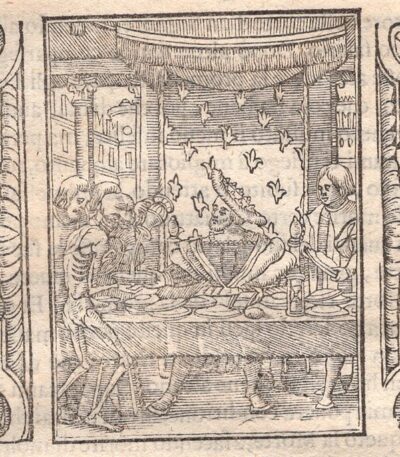
Fabio Glissenti, Il Re e la Morte, 1596
35,00 €Il Re e la Morte It is a woodcut made by Fabio Glissenti in 1596, taken from the work Athanatophilia, inspired by the famous Dance of Death by Hans Holbein.
This print represents a significant example of the cultured thought of the late sixteenth century, addressing the theme of death with an approach that is at times ironic and irreverent.
- Sheet size: cm. 21×15 approx.
- Image size: cm. 6,5×10 circa
- Support: Paper
- Condition: Excellent
L’opera di Glissenti, medico e filosofo, è composta da cinque dialoghi e un trattato, affrontando la morte in modo critico e provocatorio. Nonostante le censure e le controversie, la sua visione rimane un’importante testimonianza del pensiero intellettuale del suo tempo.

Fabio Glissenti, Il Senatore e la Morte, 1596
35,00 €Il Senatore e la Morte It is a woodcut made by Fabio Glissenti in 1596, taken from the work Athanatophilia, inspired by the famous Dance of Death by Hans Holbein.
Questa stampa rappresenta un importante esempio del pensiero colto del tardo Cinquecento, affrontando il tema della morte con un approccio a volte ironico e irriverente.
- Sheet size: cm. 21×15 approx.
- Image size: cm. 6,5×10 circa
- Support: Paper
- Condition: Excellent
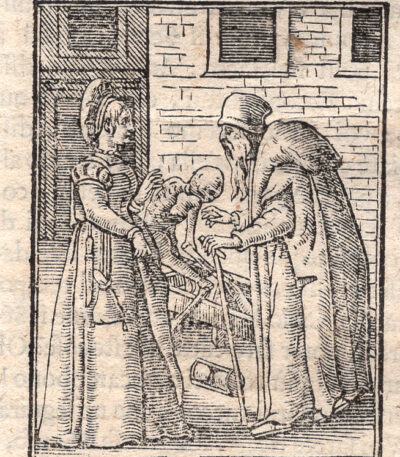
Fabio Glissenti, Il Vecchio e la Morte, 1596
35,00 €Il Vecchio e la Morte It is a woodcut made by Fabio Glissenti in 1596, part of the work Athanatophilia, inspired by the famous Dance of Death by Hans Holbein.
This print represents a significant example of the cultured thought of the late sixteenth century, addressing the theme of death with an approach that is at times ironic and irreverent.
- Sheet size: cm. 21×15 approx.
- Image size: cm. 6.5x5 approx.
- Technique: Woodcut
- Condition: Excellent
- Support: Paper
L’opera di Glissenti, medico e filosofo, è un voluminoso lavoro composto da cinque dialoghi e trenta novelle, che affronta il tema della morte con un linguaggio provocatorio. Nonostante le censure e le controversie, la sua visione rimane incisiva e attuale, rendendo queste stampe rare e preziose per collezionisti e studiosi.
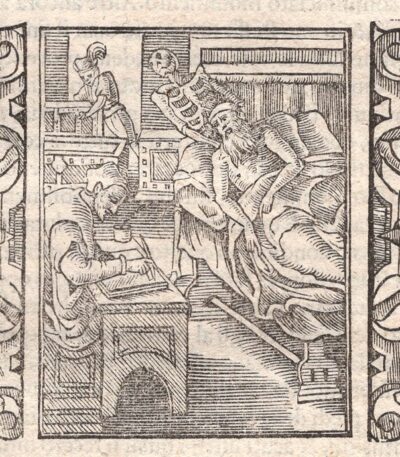
Fabio Glissenti, Il vecchio e la Morte, 1596
35,00 €Il Vecchio e la Morte It is a woodcut made by Fabio Glissenti in 1596, taken from the work Athanatophilia, inspired by the famous Dance of Death by Hans Holbein.
This unsigned print measures approximately cm. 6,5×10 and is part of a sheet of cm. 21×15.
- Era: XVI
- Technique: Woodcut
- Condition: Excellent
- Dimensions: Small
- Support: Paper
Glissenti, a doctor and philosopher, addresses the theme of death with an approach that is at times ironic and irreverent, despite the censorship and legal controversies he has had to face.
Le sue opere, parte del ciclo della ‘Danza Macabra’, offrono una visione profonda e colta del pensiero del tardo Cinquecento.
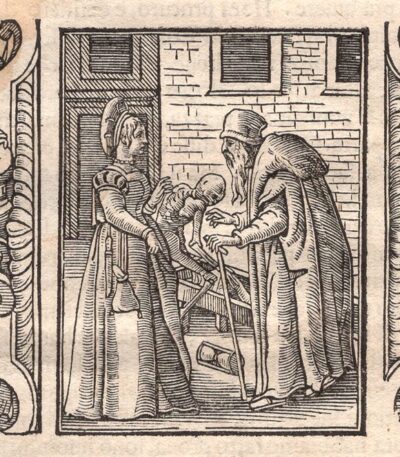
Fabio Glissenti, Il Vecchio e la Morte, 1596
35,00 €Il Vecchio e la Morte It is an engraving made by Fabio Glissenti in 1596, taken from the work Athanatophilia, inspired by the famous Dance of Death by Hans Holbein.
Questa xilografia, non firmata, rappresenta un esempio significativo del pensiero colto del tardo Cinquecento, affrontando il tema della morte con un approccio a volte ironico e irriverente.
- Sheet size: cm. 21×15 approx.
- Engraving size: cm. 6,5×10 circa
- Support: Paper
- Condition: Excellent
Questa opera è parte di un ciclo di stampe che esplorano la
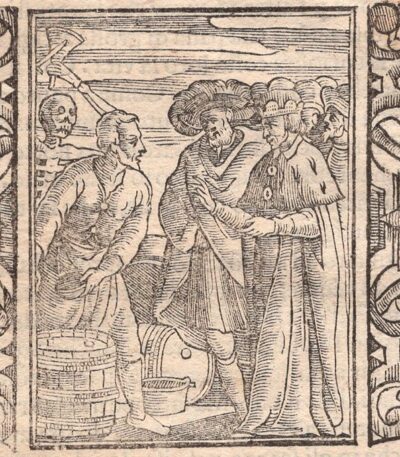
Fabio Glissenti, Il Vinaio e la Morte, 1596
35,00 €Il Vinaio e la Morte It is an engraving made by Fabio Glissenti in 1596, taken from the work Athanatophilia, inspired by the famous Dance of Death by Hans Holbein.
Questa stampa fa parte di un ciclo di immagini che affrontano il tema della morte con un approccio a volte ironico e irriverente, riflettendo il pensiero colto del tardo Cinquecento.
- Sheet size: cm. 21×15 approx.
- Engraving size: cm. 6,5×10 circa
- Technique: Woodcut
- Condition: Excellent
- Support: Paper
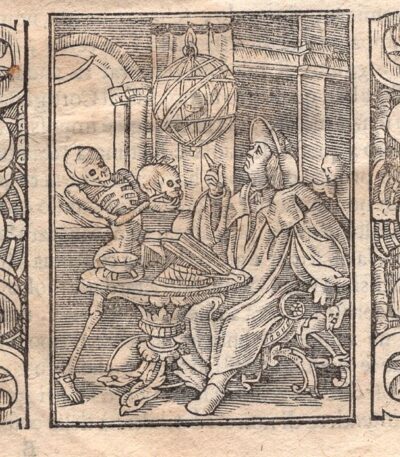
Fabio Glissenti, L’Astronomo e la Morte, 1596
35,00 €L’Astronomo e la Morte It is a woodcut made by Fabio Glissenti in 1596, part of the work Athanatophilia, inspired by the famous Dance of Death by Hans Holbein.
This unsigned print measures approximately cm. 6,5×10 and it is found on a sheet of cm. 21×15.
- Era: XVI
- Technique: Woodcut
- Condition: Excellent
- Dimensions: Small
- Support: Paper
Glissenti, medico e filosofo, affronta il tema della morte con un approccio a volte ironico e irriverente. La sua opera principale, l’Athanatophilia, è un voluminoso lavoro che esplora il dispiacere del morire attraverso cinque dialoghi e trenta novelle.
Nonostante le censure e le controversie legate alla sua pubblicazione, Glissenti ha mantenuto una visione critica e profonda sulla vita e la morte, rendendo queste stampe rare e preziose per la comprensione del pensiero del tardo Cinquecento.
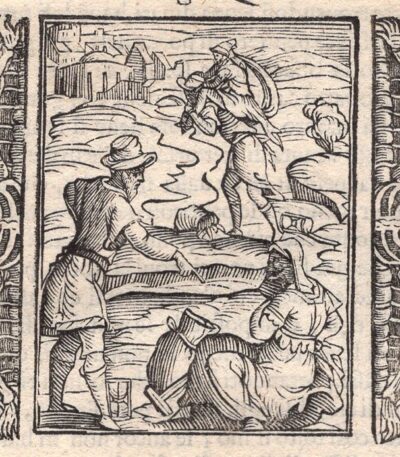
Fabio Glissenti, L’avarizia e la Morte, 1596
0,00 €L’avarizia e la Morte It is a woodcut made by Fabio Glissenti nel 1596, parte del ciclo della Danza Macabra ispirato a Hans Holbein.
This print is taken from the work Athanatophilia, un’opera che affronta il tema della morte con un approccio a volte ironico e irriverente.
- Sheet size: cm. 21×15 approx.
- Image size: cm. 6,5×10 circa
- Support: Paper
- Condition: Excellent
Glissenti, medico e filosofo, affrontò la censura per le sue idee, ma la sua opera rimane un’importante testimonianza del pensiero colto del tardo Cinquecento. Le stampe, rare e preziose, offrono uno sguardo unico sulla cultura e la società del tempo.
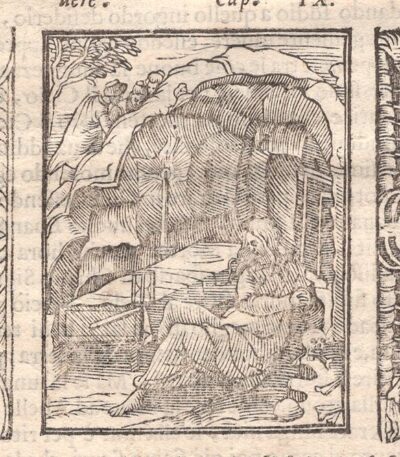
Fabio Glissenti, L’Eremita e la Morte, 1596
35,00 €L’Eremita e la Morte It is an engraving made by Fabio Glissenti in 1596, taken from the work Athanatophilia, inspired by the famous Dance of Death by Hans Holbein.
Questa stampa rappresenta una riflessione profonda e ironica sulla morte, un tema affrontato con audacia dall’autore, un intellettuale del suo tempo.
- Sheet size: cm. 21×15 approx.
- Engraving size: cm. 6,5×10 circa
- Technique: Woodcut
- Condition: Excellent state of preservation
- Support: Paper
Questa piccola ma rara stampa è parte del ciclo della ‘Danza Macabra’ e riflette il pensiero colto del tardo Cinquecento, affrontando il tema della morte con un approccio a volte irriverente.

Fabio Glissenti, L’Oratore e la Morte, 1596
35,00 €L’Oratore e la Morte It is an engraving made by Fabio Glissenti In the 1596, taken from the work Athanatophilia, inspired by the famous Dance of Death by Hans Holbein.
Questa stampa è parte di un ciclo che affronta il tema della morte con un approccio a volte ironico e irriverente, riflettendo il pensiero colto del tardo Cinquecento.
- Sheet size: cm. 21×15 approx.
- Engraving size: cm. 6,5×10 circa
- Technique: Woodcut
- Condition: Excellent
- Support: Paper
Glissenti, medico e filosofo, affrontò il tema della morte con un piglio critico, sfidando la censura del suo tempo. La sua opera principale, l’Athanatophilia, è un voluminoso lavoro composto da cinque dialoghi e trenta novelle, che esplora il dispiacere della morte.
Nonostante le difficoltà legate alla censura, Glissenti mantenne il suo sguardo audace verso il mondo ultraterreno, rendendo queste stampe rare e significative.
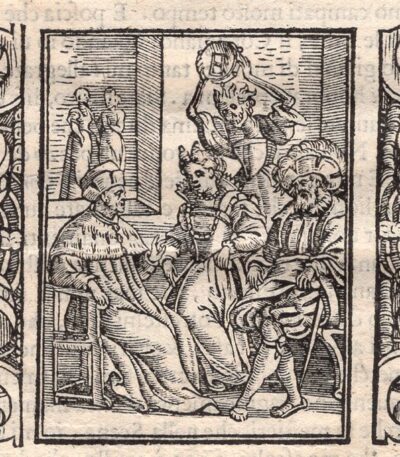
Fabio Glissenti, la Commediante e la Morte, 1596
35,00 €Fabio Glissenti, la Commediante e la Morte è una xilografia realizzata nel 1596, parte dell’opera Athanatophilia, inspired by the famous Dance of Death by Hans Holbein.
Questa pagina, non firmata, è un esempio significativo del pensiero colto del tardo Cinquecento, affrontando il tema della morte con un approccio a volte ironico e irriverente.
- Sheet size: cm. 21×15 approx.
- Image size: cm. 6,5×10 circa
- Support: Paper
- Condition: Excellent
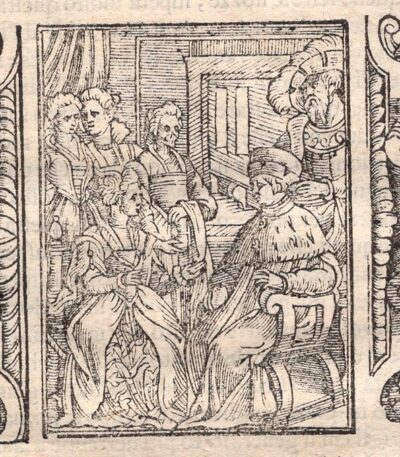
Fabio Glissenti, La Commediante, 1596
35,00 €La Commediante It is an engraving made by Fabio Glissenti in 1596, part of the work Athanatophilia, inspired by the famous Dance of Death by Hans Holbein.
Questa xilografia, non firmata, presenta un’immagine di dimensioni cm. 6,5×10 circa su un foglio di cm. 21×15 circa.
- Sheet size: cm. 21×15 approx.
- Engraving size: cm. 6,5×10 circa
- Technique: Woodcut
- Condition: Excellent
- Support: Paper
Glissenti, medico e filosofo, affronta il tema della morte con un approccio a volte ironico e irriverente, sfidando la censura del suo tempo. La sua opera principale, l’Athanatophilia, è un voluminoso lavoro che include dialoghi e novelle, e riflette il pensiero colto della fine del ‘500.
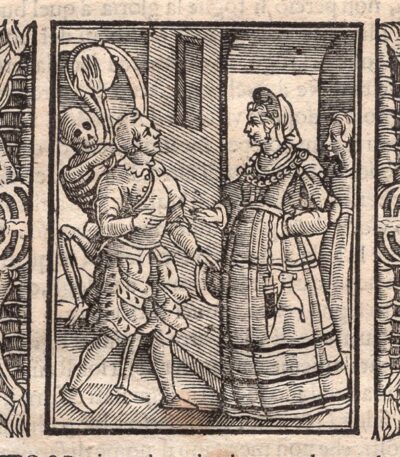
Fabio Glissenti, La Cortigiana e la Morte, 1596
35,00 €La Cortigiana e la Morte It is an engraving made by Fabio Glissenti in 1596, taken from the work Athanatophilia, inspired by the famous Dance of Death by Hans Holbein.
Questa stampa fa parte di un ciclo di immagini che affrontano il tema della morte con un approccio a volte ironico e irriverente, riflettendo il pensiero colto del tardo Cinquecento.
- Sheet size: cm. 21×15 approx.
- Engraving size: cm. 10×6,5 circa
- Technique: Woodcut
- Condition: Excellent
- Support: Paper
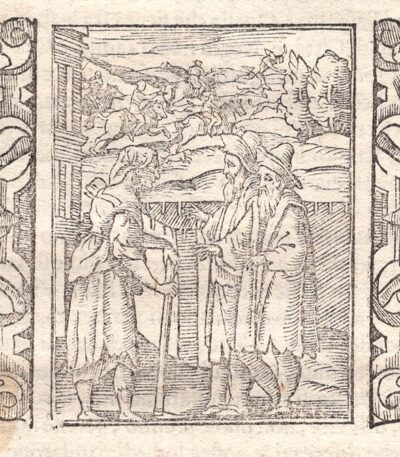
Fabio Glissenti, The Fatigue, 1596
35,00 €The Fatigue It is an engraving made by Fabio Glissenti in 1596, taken from the work Athanatophilia, inspired by the famous Dance of Death by Hans Holbein.
This unsigned woodcut measures approximately cm. 6,5×10 for the image on a sheet of cm. 21×15.
- Era: XVI
- Technique: Woodcut
- Condition: Excellent
- Dimensions: Small
- Support: Paper
Glissenti, a doctor and philosopher, addresses the theme of death with an approach that is at times ironic and irreverent, despite the censorship and legal controversies he has had to face.
His works, part of the cultured thought of the late sixteenth century, offer a unique insight into the culture and philosophy of the time.
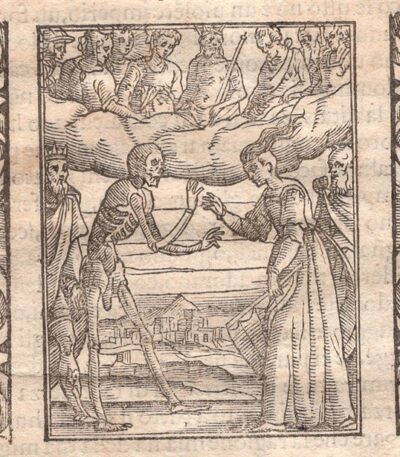
Fabio Glissenti, La Fortuna e la Morte, 1596
35,00 €La Fortuna e la Morte It is an engraving made by Fabio Glissenti In the 1596, taken from the work Athanatophilia, inspired by the famous Dance of Death by Hans Holbein.
Questa xilografia, non firmata, presenta un’immagine di dimensioni cm. 6,5×10 circa su un foglio di cm. 21×15 circa.
- Era: XVI
- Technique: Woodcut
- Condition: Excellent
- Dimensions: Small
- Support: Paper
Glissenti, medico e filosofo, affronta il tema della morte con un approccio a volte ironico e irriverente. La sua opera principale, l’Athanatophilia, è un voluminoso lavoro che include cinque dialoghi e trenta novelle.
Nonostante le censure e le controversie legali, Glissenti mantenne il suo sguardo critico verso il mondo ultraterreno, rendendo queste stampe un’importante testimonianza del pensiero colto del tardo Cinquecento.
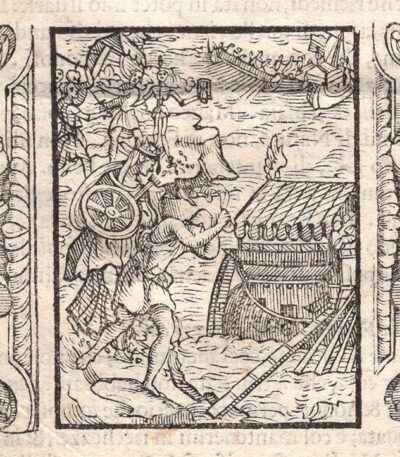
Fabio Glissenti, La Fortuna e la Morte, 1596
35,00 €La Fortuna e la Morte It is an engraving made by Fabio Glissenti in 1596, taken from the work Athanatophilia, inspired by the famous Dance of Death by Hans Holbein.
Questa xilografia rappresenta un esempio significativo del pensiero colto del tardo Cinquecento, affrontando il tema della morte con un approccio a volte ironico e provocatorio.
- Sheet size: cm. 21×15 approx.
- Engraving size: cm. 6,5×10 circa
- Support: Paper
- Condition: Excellent
L’opera di Glissenti, medico e filosofo, è un voluminoso lavoro composto da cinque dialoghi e trenta novelle, che affronta la morte e la vita con uno sguardo critico e disincantato.
Nonostante le censure e le controversie, la sua visione rimane intatta, rendendo queste stampe rare e preziose nel panorama artistico e culturale del tempo.
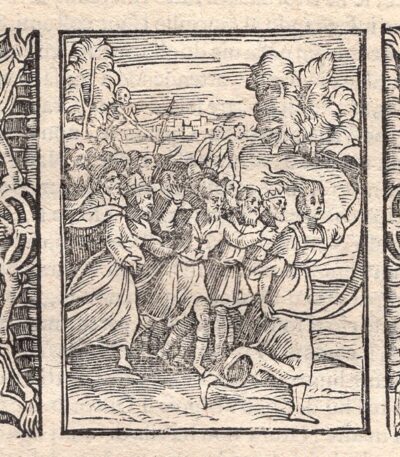
Fabio Glissenti, La Fortuna e la Morte, 1596
35,00 €La Fortuna e la Morte It is an engraving made by Fabio Glissenti in 1596, taken from the work Athanatophilia, inspired by the famous Dance of Death by Hans Holbein.
Questa stampa è un esempio significativo del pensiero colto del tardo Cinquecento, affrontando il tema della morte con un approccio a volte ironico e provocatorio.
- Sheet size: cm. 21×15 approx.
- Engraving size: cm. 6,5×10 circa
- Technique: Woodcut
- Condition: Excellent
- Support: Paper
Le stampe, pubblicate a Venezia presso Domenico Farri, sono parte di un ciclo di immagini che esplorano il tema della morte, riflettendo la complessità del pensiero di Glissenti, un medico e filosofo del suo tempo. La sua opera, pur affrontando la censura, rimane un’importante testimonianza della cultura e della filosofia del periodo.
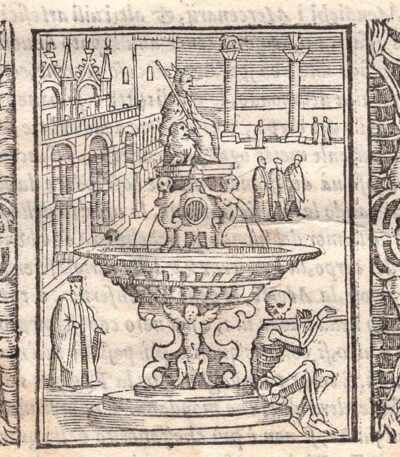
Fabio Glissenti, La Morte a Venezia, 1596
35,00 €La Morte a Venezia It is a woodcut made by Fabio Glissenti in 1596, taken from the work Athanatophilia, inspired by the famous Dance of Death by Hans Holbein.
Questa stampa rappresenta un momento significativo della riflessione sulla morte, affrontato con un tono a volte ironico e irriverente.
- Sheet size: cm. 21×15 approx.
- Image size: cm. 6,5×10 circa
- Support: Paper
- Condition: Excellent
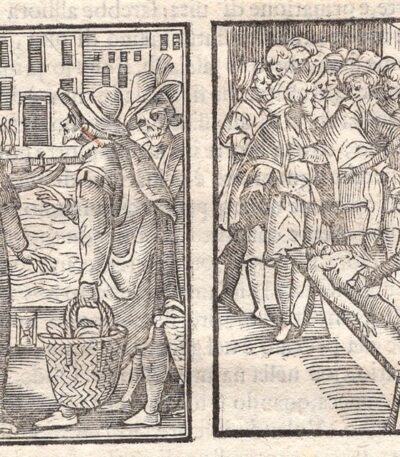
Fabio Glissenti, La Morte a Venezia, Autopsia, 1596
35,00 €La Morte a Venezia, Autopsia It is an engraving made by Fabio Glissenti in 1596, part of the work Athanatophilia, inspired by the famous Dance of Death by Hans Holbein.
This unsigned woodcut features images measuring approximately 6.5 x 5 cm on a sheet measuring approximately 21 x 15 cm.
- Sheet size: cm. 21×15 approx.
- Engraving size: cm. 6.5x5 approx.
- Support: Paper
- Condition: Excellent
Glissenti, medico e filosofo, affronta il tema della morte con un approccio a volte ironico e irriverente, sfidando la censura e subendo un processo.
Le sue opere, tra cui l’Athanatophilia, offrono uno sguardo penetrante sul pensiero colto del tardo Cinquecento, rendendo queste stampe piccole ma rare un’importante testimonianza culturale.
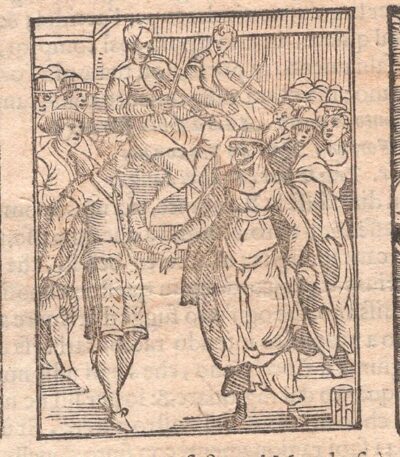
Fabio Glissenti, La Morte alla festa, 1596
35,00 €La Morte alla festa It is an engraving made by Fabio Glissenti In the 1596, taken from the work Athanatophilia, inspired by the famous Dance of Death by Hans Holbein.
Questa xilografia rappresenta un momento significativo del ciclo della ‘Danza Macabra’, affrontando il tema della morte con un approccio a volte ironico e irriverente.
- Sheet size: cm. 21×15 approx.
- Engraving size: cm. 6,5×10 circa
- Support: Paper
- Condition: Excellent state of preservation
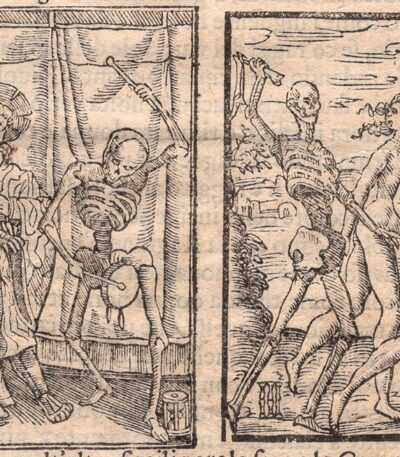
Fabio Glissenti, La Morte alla festa, La Cacciata dal Paradiso, 1596
35,00 €La Morte alla festa, La Cacciata dal Paradiso It is a woodcut made by Fabio Glissenti in 1596, part of the work Athanatophilia, inspired by the famous Dance of Death by Hans Holbein.
This unsigned print measures approximately cm. 6,5×5 per un foglio di cm. 21×15 e rappresenta un esempio significativo del pensiero colto del tardo Cinquecento.
- Era: XVI
- Technique: Woodcut
- Condition: Excellent
- Dimensions: Small
- Support: Paper
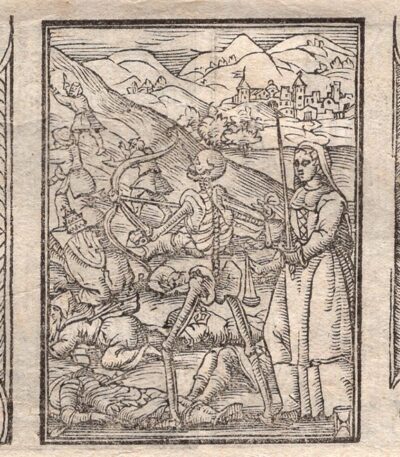
Fabio Glissenti, Death with the Bow, 1596
35,00 €Death with the Bow It is an engraving made by Fabio Glissenti in 1596, taken from the work Athanatophilia, inspired by the famous Dance of Death by Hans Holbein.
This unsigned print features two images measuring 6.5x10 cm and 6.5x5 cm on a sheet measuring approximately 21x15 cm.
- Era: XVI
- Technique: Woodcut
- Condition: Excellent
- Dimensions: Small
- Support: Paper
Glissenti, a physician and philosopher, addresses the theme of death with an approach that is sometimes ironic, challenging the censorship of his time. His main work, Athanatophilia, is a voluminous work composed of five dialogues and thirty short stories, which reflect the cultured thought of the late sixteenth century.
The rare and valuable prints offer a unique insight into the culture and ideas of an era when death was a central theme in philosophical and artistic reflection.
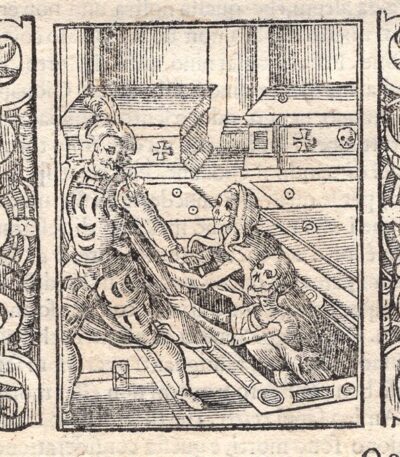
Fabio Glissenti, La Morte dalla tomba. 1596
35,00 €La Morte dalla Tomba It is an engraving made by Fabio Glissenti nel 1596, che rappresenta la figura della Morte che esce dalla tomba per rapire un cortigiano.
Questa opera è tratta dall’Athanatofilia, un’opera ispirata alla celebre Dance of Death by Hans Holbein.
- Sheet size: cm. 21×15 approx.
- Image size: cm. 6,5×10 circa
- Technique: Woodcut
- Condition: Excellent
- Support: Paper
Glissenti, medico e filosofo, affronta il tema della morte con un approccio a volte ironico, sfidando la censura del suo tempo. La sua opera principale, l’Athanatophilia, è un voluminoso lavoro composto da cinque dialoghi e trenta novelle, che esplora il dispiacere della morte.
Questa incisione è una rara testimonianza del pensiero colto del tardo Cinquecento, rappresentando un’importante parte della tradizione iconografica della Danza Macabra.