Ancient Foreign Masters

Showing 145–168 of 703 results

da Joannis e Raphael Sadeler, Hilarion, 1850

40,00 

Hilarion It is an engraving made by Joannis and Raphael Sadeler in 1850, taken from the work Solitudo sive vitae patrum Eremicolarum.
Questa opera, che risale al XVI-XVII secolo, presenta un’illustrazione affascinante e dettagliata, tipica dello stile dei Sadeler.

  • Sheet size: cm. 26×42 approx.
  • Size of the joke: cm. 17×21 approx.
  • Support: Medium thickness unlaid paper
  • Condition: Excellent

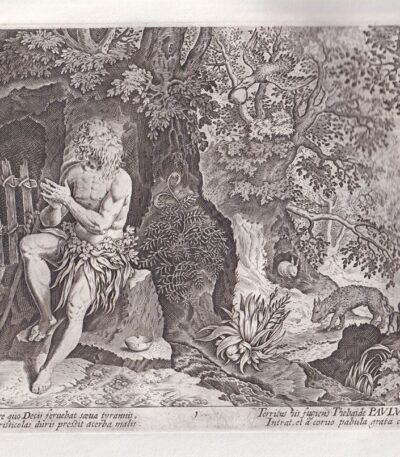
by Joannis and Raphael Sadeler, Paulus, 1850

40,00 

Paulus It is an engraving made by Joannis and Raphael Sadeler in 1850, taken from the work Solitudo sive vitae patrum Eremicolarum.
Questa acquaforte, che risale al XVI-XVII secolo, presenta una battuta di cm. 17×21 ed è stampata su carta di medio spessore non vergellata di dimensioni cm. 26×42.

  • Sheet size: cm. 26×42
  • Engraving size: cm. 17×21
  • Support: Medium thickness unlaid paper
  • Condition: Excellent

da Raffaello Sanzio, Studio per il gruppo di Archimede e i suoi allievi nella Scuola di Atene, acquatinta, 1817

120,00 

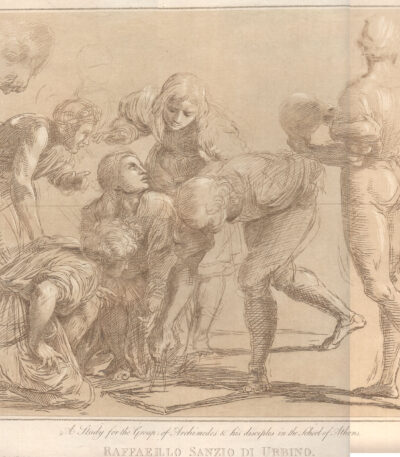
Studio per il gruppo di Archimede e i suoi allievi nella Scuola di Atene

  • Artista originale: Raphael Sanzio
  • Engraver: E.C. Lewis
  • Technique: Etching and aquatint
  • Support: Carta vergellata con filigrana datata 1817
  • Dimensions:
    • Immagine: 26 x 35 cm (alla battuta del rame)
    • Foglio: 32 x 48 cm
  • Iscrizioni: Scritta in inglese in basso, a destra la dicitura “Acquatinta di E.C. Lewis”

Description:
Questa raffinata acquaforte e acquatinta raffigura uno studio preparatorio ispirato alla celebre “Scuola di Atene” di Raffaello, concentrandosi sul gruppo di Archimede e i suoi allievi. L’opera mette in evidenza la maestria del disegno e la precisione con cui il grande matematico è stato rappresentato, con i suoi allievi intenti a seguire i suoi insegnamenti.

Interesse collezionistico:
Un’incisione di grande fascino, che coniuga la genialità compositiva di Raffaello con l’abilità tecnica dell’incisore E.C. Lewis. L’uso della carta vergellata con filigrana del 1817 aggiunge valore storico e collezionistico all’opera. Perfetta per collezionisti di stampe neoclassiche, amanti dell’arte rinascimentale e studiosi della Scuola di Atene.

From Rembrandt, Self-Portrait, 18th century

80,00 

Autoritratto di Rembrandt è un’incisione realizzata nel XVIII secolo, che rappresenta un soggetto iconico dell’arte.
Questa opera è stata incisa in rame utilizzando la tecnica dell’etching and of the burin, senza margini, e presenta un’ottima impressione su carta molto sottile.

  • Sheet size: mm. 97×85
  • Support: Very thin paper glued on straw-colored cardboard
  • Condition: Excellent preservation

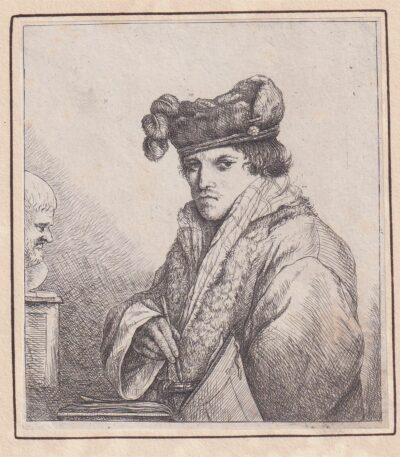
from Rembrandt, David Deuchar

40,00 

Autoritratto di Rembrandt It is an engraving made by David Deuchar nel 1803, ispirata ai maestri della scuola olandese, in particolare Rembrandt e Adriaen Van Ostade.
This work is part of the collection A Collection of Etchings after the most Eminent Master of the Dutch and Flemish Schools, che include anche opere di Cornelius Bega e Van Vliet.

  • Sheet size: cm. 20×15 approx.
  • Engraving size: cm. 9,5×8,5 circa
  • Technique: Etching
  • Support: Very thin paper back-glued on heavy straw-colored paper
  • Condition: Excellent

from Rembrandt, David Deuchar

120,00 

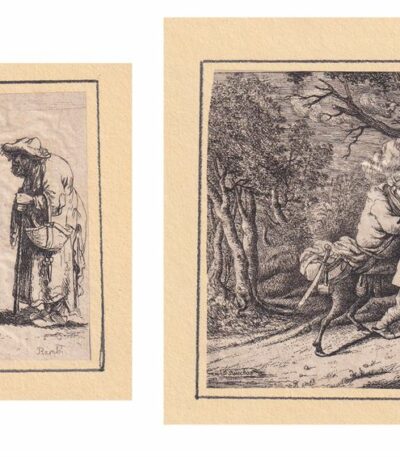
Flight into Egypt And Due mendicanti sono due incisioni in rame realizzate da David Deuchar nel XVIII secolo, ispirate ai celebri soggetti di Rembrandt.
Queste opere, eseguite con la tecnica dell’etching and of the burin, presentano dimensioni delle immagini di mm. 90×85 e mm. 78×54.

  • Sheet size: senza margini
  • Support: Very thin paper glued on straw-colored cardboard
  • Condition: Excellent impression and excellent preservation

from Rembrandt, David Deuchar

120,00 

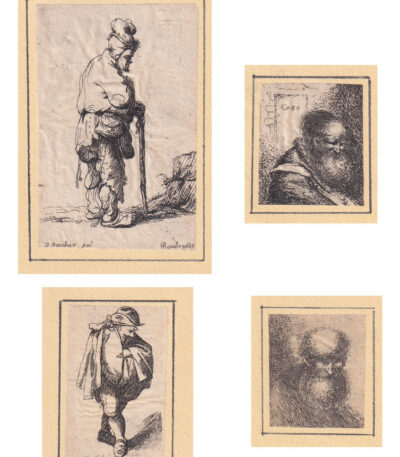
Da Rembrandt, Mendicanti, Teste di Vecchi è una serie di quattro incisioni realizzate da David Deuchar nel XVIII secolo.
Queste opere, ispirate ai soggetti di Rembrandt, sono eseguite in etching and burin e presentano un’ottima impressione e conservazione.

  • Dimensioni delle immagini: mm. 42×39, mm. 90×57, mm. 58×35
  • Support: Carta molto sottile, controcollata su cartoncino color paglierino
  • Condition: Excellent

da Rembrandt, L’ adorazione dei Magi, David Deuchar

50,00 

The Adoration of the Magi It is an engraving made by David Deuchar in 1803, inspired by the masterpieces of Rembrandt.
This work is part of the collection A Collection of Etchings after the most Eminent Master of the Dutch and Flemish Schools, which also includes works by artists such as Ostade, Cornelius Bega and Van Vliet.

  • Sheet size: cm. 35×25 approx.
  • Engraving size: cm. 6x8.5 approx.
  • Technique: Etching and Burin
  • Support: Very thin paper back-glued on heavy straw-colored paper
  • Condition: Excellent impression and excellent preservation

da Sadeler, Abraham, 1850

40,00 

Da Sadeler, Abraham It is an engraving made by Joannis and Raphael Sadeler in 1850.
Questa acquaforte è tratta da Solitudo sive vitae patrum Eremicolarum, un’opera che risale al XVI-XVII secolo e rappresenta la vita degli eremiti.

  • Sheet size: cm. 26×42 approx.
  • Size of the joke: cm. 17×21 approx.
  • Technique: Etching
  • Support: Medium thickness unlaid paper
  • Condition: Excellent

da Sadeler, Apelles, 1850

40,00 

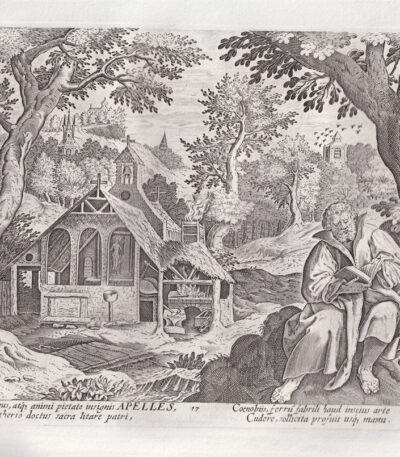
Apelles It is an engraving made by Joannis and Raphael Sadeler in 1850, taken from the work Solitudo sive vitae patrum Eremicolarum.
This work represents the life of hermits and is set in the context of the 16th-17th century.

  • Sheet size: cm. 26×42 approx.
  • Size of the joke: cm. 17×21 approx.
  • Technique: Etching
  • Support: Medium thickness unlaid paper
  • Condition: Excellent

da Sadeler, Apollonius, 1850

40,00 

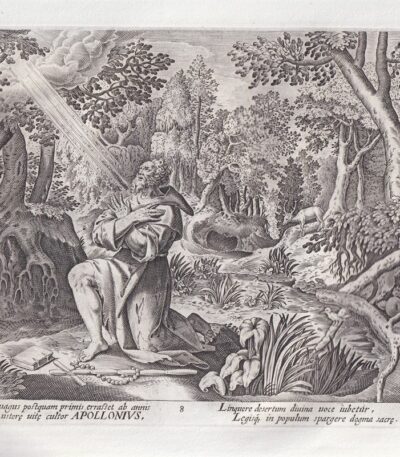
Apollonius It is an engraving made by Joannis and Raphael Sadeler in 1850, taken from the work Solitudo sive vitae patrum Eremicolarum.
This work represents the life of hermits and is set in the context of the 16th-17th century.

  • Sheet size: cm. 26×42 approx.
  • Size of the joke: cm. 17×21 approx.
  • Technique: Etching
  • Support: Medium thickness unlaid paper
  • Condition: Excellent

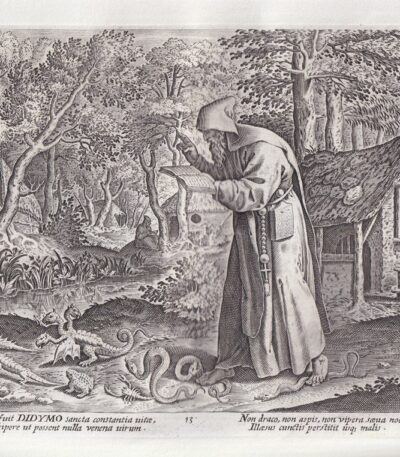
da Sadeler, Didymo, 1850

40,00 

Didymo It is an engraving made by Joannis and Raphael Sadeler in 1850.
This work is taken from Solitudo sive vitae patrum Eremicolarum, a collection representing the life of hermits, dating back to the 16th-17th century.

  • Sheet size: cm. 26×42 approx.
  • Engraving size: cm. 17×21 approx.
  • Support: Medium thickness unlaid paper
  • Condition: Excellent

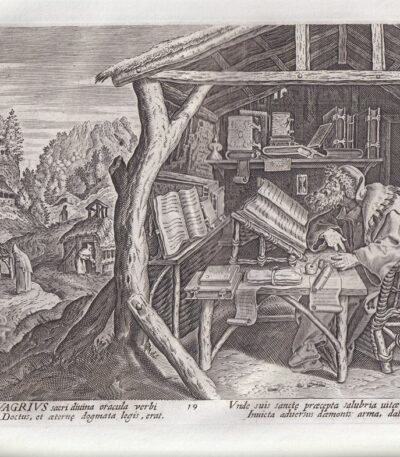
da Sadeler, Evagrius, 1850

40,00 

Evagrius It is an etching made by Joannis and Raphael Sadeler in 1850, taken from the work Solitudo sive vitae patrum Eremicolarum.
Questa incisione rappresenta la vita degli eremiti e si colloca tra il XVI e il XVII secolo.

  • Sheet size: cm. 26×42 approx.
  • Engraving size: cm. 17×21 approx.
  • Support: Medium thickness unlaid paper
  • Condition: Excellent

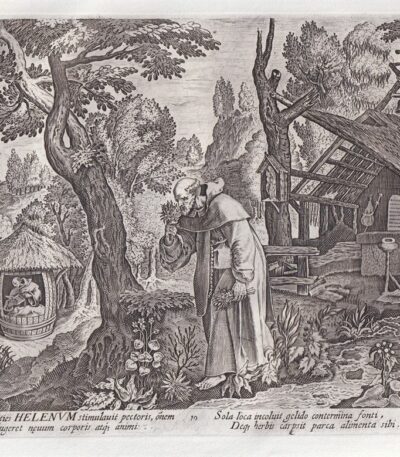
from Sadeler, Helenum, 1850

40,00 

Helenum It is an engraving made by Joannis and Raphael Sadeler in 1850, taken from the work Solitudo sive vitae patrum Eremicolarum.
This work represents the life of hermits and is placed in a context of great historical and cultural interest.

  • Sheet size: cm. 26×42 approx.
  • Engraving size: cm. 17×21 approx.
  • Support: Medium thickness unlaid paper
  • Condition: Excellent

da Sadeler, Ioannes 1850

40,00 

Da Sadeler, Ioannes It is an etching made by Joannis and Raphael Sadeler in 1850.
This work is taken from Solitudo sive vitae patrum Eremicolarum, a collection representing the life of hermits, dating back to the 16th-17th century.

  • Sheet size: cm. 26×42 approx.
  • Size of the joke: cm. 17×21 approx.
  • Support: Medium thickness unlaid paper
  • Condition: Excellent

da Sadeler, Ioannes, 1850

40,00 

Rappresentazione della Vita degli Eremiti è un’acquaforte realizzata da Ioannes e Raphael Sadeler nel 1850, tratta dall’opera Solitudo sive vitae patrum Eremicolarum.
Questa incisione offre uno sguardo affascinante sulla vita degli eremiti, un tema ricorrente nel XVI e XVII secolo.

  • Size of the joke: cm. 17×21
  • Sheet size: cm. 26×42
  • Support: Medium thickness unlaid paper
  • Condition: Excellent

from Sadeler, Macharius, 1850

40,00 

Macharius It is an etching made by Joannis and Raphael Sadeler in 1850, taken from the work Solitudo sive vitae patrum Eremicolarum.
This engraving represents the life of hermits and is set in the context of the 16th-17th century.

  • Sheet size: cm. 26×42 approx.
  • Engraving size: cm. 17×21 approx.
  • Support: Medium thickness unlaid paper
  • Condition: Excellent

from Sadeler, Mutius, 1850

40,00 

Mutius It is an engraving made by Joannis and Raphael Sadeler in 1850, taken from the work Solitudo sive vitae patrum Eremicolarum.
This work represents the life of hermits and is set in the context of the 16th-17th century.

  • Sheet size: cm. 26×42 approx.
  • Engraving size: cm. 17×21 approx.
  • Support: Medium thickness unlaid paper
  • Condition: Excellent

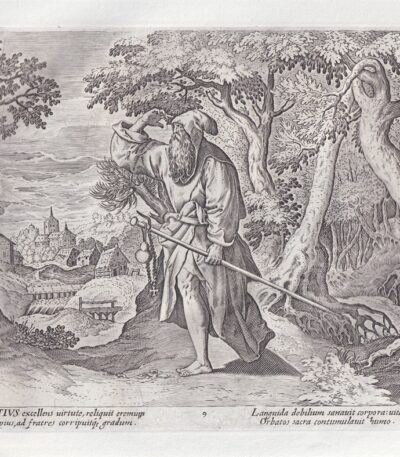
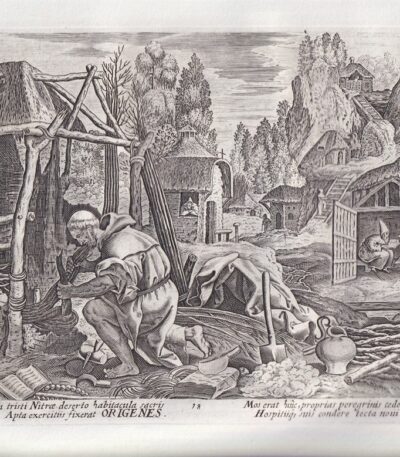
da Sadeler, Origenes, 1850

40,00 

Origenes It is an engraving made by Joannis and Raphael Sadeler in 1850.
This work is taken from Solitudo sive vitae patrum Eremicolarum, an important collection representing the life of hermits.

  • Sheet size: cm. 26×42 approx.
  • Size of the joke: cm. 17×21 approx.
  • Support: Medium thickness unlaid paper
  • Condition: Excellent

da Sadeler, Paphnutius, 1850

40,00 

Paphnutius It is an engraving made by Joannis and Raphael Sadeler in 1850, taken from the work Solitudo sive vitae patrum Eremicolarum.
Questa opera rappresenta la vita degli eremiti ed è una probabile edizione del XIX secolo.

  • Sheet size: cm. 26×42 approx.
  • Engraving size: cm. 17×21 approx.
  • Technique: Etching
  • Support: Medium thickness unlaid paper
  • Condition: Excellent

da Sadeler, Spiridionis, 1850

40,00 

Spiridionis It is an engraving made by Joannis and Raphael Sadeler in 1850, taken from the work Solitudo sive vitae patrum Eremicolarum.
This work represents the life of hermits and is set in the context of the 16th-17th century.

  • Sheet size: cm. 26×42 approx.
  • Engraving size: cm. 17×21 approx.
  • Support: Medium thickness unlaid paper
  • Condition: Excellent

da Sadeler, Theonas, 1850

40,00 

Theonas It is an etching made by Joannis and Raphael Sadeler in 1850, taken from the work Solitudo sive vitae patrum Eremicolarum.
Questa incisione rappresenta la vita degli eremiti e si colloca probabilmente in una edizione del XIX secolo.

  • Sheet size: cm. 26×42 approx.
  • Engraving size: cm. 17×21 approx.
  • Support: Medium thickness unlaid paper
  • Condition: Excellent

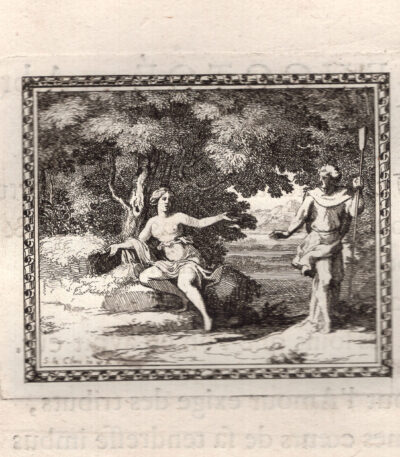
Dafne trasformata in roccia, Metamorfosi di Ovidio, acquaforte del 1676

30,00 

Questa splendida incisione del 1676 proviene dalla prestigiosa edizione delle “Métamorphoses d’Ovide en rondeaux” Of Isaac de Benserade, un’opera di grande raffinatezza, commissionata da Luigi XIV per l’educazione del Delfino di Francia.

Descrizione dell’opera

  • Titolo: Stampa tratta da Les Métamorphoses d’Ovide en rondeaux

  • Author: Isaac de Benserade (testo), Le Clerc, Chauveau e Le Brun (incisioni)

  • Publisher: De l’Imprimerie Royale, Parigi, 1676

  • Technique: Acquaforte su carta vergellata (testo al verso)

  • Dimensions:

    • Incisione: cm 7,5 × 9 (alla battuta del rame)

    • Foglio: cm 27 × 20

Importanza storica e artistica

L’opera di Benserade è una delle più celebri reinterpretazioni seicentesche delle Ovid's Metamorphoses. La particolarità di questa edizione è il suo approccio didattico ed estetico: ogni mito è presentato attraverso una citazione in latino, una riscrittura in versi (i rondeaux, tipici componimenti poetici francesi) e un’incisione su rame che illustra la scena.

Le incisioni furono realizzate da tre importanti artisti dell’epoca:

  • Sébastien Le Clerc (1637-1714), incisore di corte del Re Sole

  • François Chauveau (1613-1676), celebre illustratore parigino

  • Charles Le Brun (1619-1690), pittore ufficiale di Luigi XIV

Questa stampa rappresenta un esempio straordinario di arte barocca, caratterizzata da un tratto preciso e dettagliato, che enfatizza la drammaticità e il dinamismo delle scene mitologiche.

Valore collezionistico

L’opera, stampata presso l’Imprimerie Royale, è una testimonianza del lusso e della raffinatezza della cultura francese sotto Luigi XIV. Le incisioni, realizzate con grande maestria, sono oggi oggetti di culto tra i collezionisti di ancient books, incisioni del XVII secolo And iconografia mitologica.

Un pezzo di altissimo valore storico e artistico, espressione della grande tradizione incisoria francese e dell’interesse del Re Sole per l’arte e la letteratura classica.

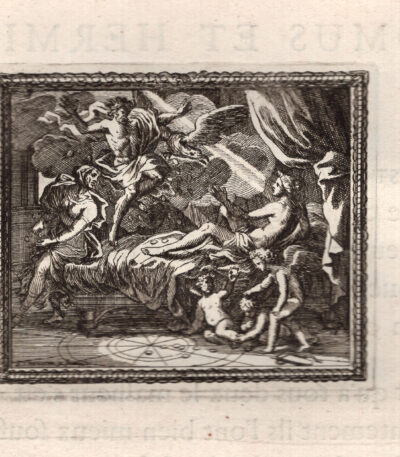
Danae e Giove e la pioggia d’oro, Metamorfosi di Ovidio, acquaforte del 1676

30,00 

Questa splendida incisione del 1676 proviene dalla prestigiosa edizione delle “Métamorphoses d’Ovide en rondeaux” Of Isaac de Benserade, un’opera di grande raffinatezza, commissionata da Luigi XIV per l’educazione del Delfino di Francia.

Descrizione dell’opera

  • Titolo: Stampa tratta da Les Métamorphoses d’Ovide en rondeaux

  • Author: Isaac de Benserade (testo), Le Clerc, Chauveau e Le Brun (incisioni)

  • Publisher: De l’Imprimerie Royale, Parigi, 1676

  • Technique: Acquaforte su carta vergellata (testo al verso)

  • Dimensions:

    • Incisione: cm 7,5 × 9 (alla battuta del rame)

    • Foglio: cm 27 × 20

Importanza storica e artistica

L’opera di Benserade è una delle più celebri reinterpretazioni seicentesche delle Ovid's Metamorphoses. La particolarità di questa edizione è il suo approccio didattico ed estetico: ogni mito è presentato attraverso una citazione in latino, una riscrittura in versi (i rondeaux, tipici componimenti poetici francesi) e un’incisione su rame che illustra la scena.

Le incisioni furono realizzate da tre importanti artisti dell’epoca:

  • Sébastien Le Clerc (1637-1714), incisore di corte del Re Sole

  • François Chauveau (1613-1676), celebre illustratore parigino

  • Charles Le Brun (1619-1690), pittore ufficiale di Luigi XIV

Questa stampa rappresenta un esempio straordinario di arte barocca, caratterizzata da un tratto preciso e dettagliato, che enfatizza la drammaticità e il dinamismo delle scene mitologiche.

Valore collezionistico

L’opera, stampata presso l’Imprimerie Royale, è una testimonianza del lusso e della raffinatezza della cultura francese sotto Luigi XIV. Le incisioni, realizzate con grande maestria, sono oggi oggetti di culto tra i collezionisti di ancient books, incisioni del XVII secolo And iconografia mitologica.

Un pezzo di altissimo valore storico e artistico, espressione della grande tradizione incisoria francese e dell’interesse del Re Sole per l’arte e la letteratura classica.

Explore the fascinating world of antique prints

Antique prints are silent witnesses of history, capable of transporting us to distant eras through the art of engraving. Our e-commerce offers a vast selection of these precious finds, carefully selected for their authenticity and artistic value. Whether you are an expert collector or a novice enthusiast, you will find unique pieces here that will enrich your spaces with a touch of timeless elegance.

A safe and rewarding shopping experience

We understand the importance of each individual print and are committed to ensuring a flawless purchasing experience. Our secure payment system and insured shipping with professional packaging ensure that each piece arrives in the best condition. Our expertise in the sector allows us to offer detailed descriptions and personalized advice, helping you to make informed choices. If you have any questions or specific requests, do not hesitate to contact us: we will be happy to guide you into the wonderful world of antique prints.